








What's Happening?
Lucid Motors, an American electric vehicle (EV) manufacturer, is grappling with significant operational challenges, marked by a substantial drop in production and a growing stockpile of unsold vehicles. In the quarter ending September 30, the company
produced only 2,954 vehicles, a 38% decrease from the previous quarter and significantly below Wall Street estimates. Deliveries also fell short, with 3,806 vehicles delivered against an analyst expectation of approximately 4,700. This marks a trend over the past year where Lucid has consistently produced more cars than it has sold. In response, new CEO Silvio Napoli, who took office in June, has initiated a cost-cutting campaign, including staff reductions and the elimination of a second production shift at its Arizona factory. The company aims for $1.4 billion in cash-flow improvements this year as part of its broader operating reset, which includes aligning production with near-term demand to reduce its inventory.
Why It's Important?
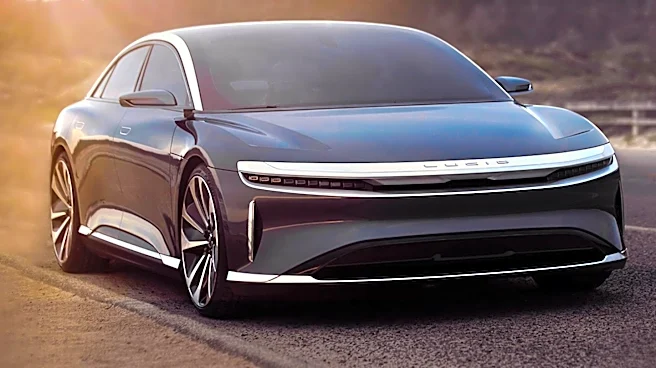
Lucid Motors' struggles highlight the intense competitive pressures and market dynamics within the luxury EV segment. While the broader EV market shows signs of growth, as evidenced by stronger delivery numbers from competitors like Tesla and Rivian, Lucid's specific issues point to challenges in demand for its high-priced vehicles. The company's flagship models, the Lucid Air and Lucid Gravity, are priced between $70,000 and $126,000, a price point that appears to limit their market appeal. This situation could signal a broader market resistance to premium-priced EVs, even as fuel prices rise and consumer interest in electric and hybrid vehicles increases. The company's inability to meet delivery expectations and its accumulating inventory could lead to further financial strain, impacting its stock performance and long-term viability as an independent entity in the rapidly evolving automotive industry.
What's Next?
Lucid Motors is expected to continue its operational reset under CEO Silvio Napoli, focusing on cost reductions and inventory management. The company's stated goal of achieving $1.4 billion in cash-flow improvements this year will likely involve further adjustments to production schedules and potentially more aggressive sales strategies to move existing inventory. Investors will closely watch for any signs of improved sales figures and a reduction in the production-to-delivery gap in upcoming financial reports. The company's stock performance, which has seen a significant decline, will remain a key indicator of market confidence in its turnaround efforts. Furthermore, the success or failure of Lucid's strategy could influence other luxury EV manufacturers, prompting them to re-evaluate their pricing and production models in response to market demand.
Beyond the Headlines
Lucid's current predicament extends beyond immediate financial and production figures, touching upon the broader challenges of scaling a luxury EV brand in a competitive landscape dominated by established players and more affordable alternatives. The company's initial strategy of targeting the ultra-luxury segment with high-performance, high-priced vehicles may be facing a reality check as consumer preferences shift towards more accessible EV options. This situation raises questions about the sustainability of niche luxury EV markets and whether innovation alone is sufficient without a robust market for premium pricing. The company's future may depend on its ability to adapt its product offerings, potentially introducing more affordable models, or finding strategic partnerships to leverage its technology and manufacturing capabilities. The outcome for Lucid could serve as a case study for other emerging EV manufacturers aiming to disrupt the automotive industry.