

What's Happening?
Sacramento Kings General Manager Scott Perry has publicly dismissed claims that team owner Vivek Ranadive 'roasted' players and staff during a recent team dinner. Reports, initially shared by NBA analyst Zach Lowe, suggested Ranadive had been highly critical
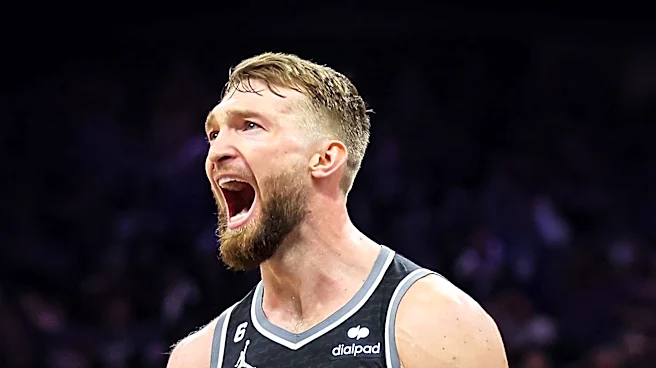
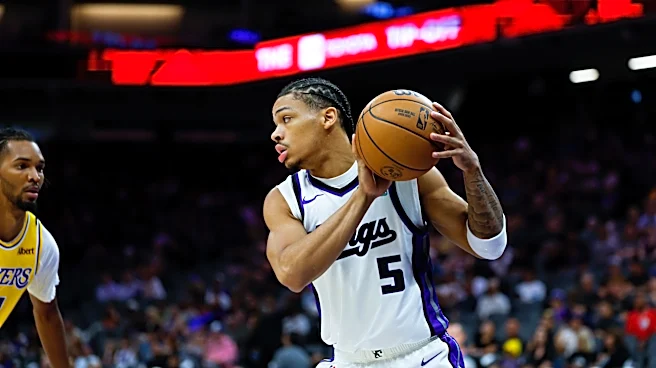
of the team's performance and personnel. However, Perry, in an appearance on the Deuce & Mo podcast, clarified that these reports misrepresented the owner's intentions. According to Perry, Ranadive's address was motivational, aimed at rallying the team against external disrespect and encouraging them to improve their performance in the upcoming season. Perry stated that Ranadive began by light-heartedly discussing his own media perceptions before extending similar comments to team members, which was perceived as motivational by those present. The GM emphasized that Ranadive holds deep respect for his players and that the meeting's core message was about collective effort to prove doubters wrong, not a 'roast.' The Kings finished the previous season with a 22-60 record, placing 14th in the Western Conference, and are looking to improve with the return of Domantas Sabonis and the potential of rookie Darius Acuff Jr.
Why It's Important?
This clarification from General Manager Scott Perry is important for maintaining team morale and public perception of the Sacramento Kings organization. In professional sports, the relationship between ownership, management, and players is crucial for success. Reports of an owner 'roasting' his team can create internal discord, damage player confidence, and negatively impact recruitment efforts. Perry's swift rebuttal aims to mitigate any potential fallout, ensuring that players feel supported and respected by ownership. A unified front from management and ownership can foster a more positive team environment, which is essential for a team like the Kings looking to rebound from a poor season. For fans, understanding the true nature of such interactions can influence their perception of the team's internal stability and future prospects. A stable and supportive organizational culture is often a prerequisite for on-court success, making Perry's intervention significant for the team's upcoming season.
What's Next?
The Sacramento Kings will now focus on their upcoming season, aiming to improve upon their previous 22-60 record. With General Manager Scott Perry having addressed and clarified the nature of owner Vivek Ranadive's team dinner address, the organization will likely seek to move forward with a unified message. The team's performance in the early part of the season will be crucial in demonstrating whether the motivational message, as described by Perry, has had a positive impact. The return of key player Domantas Sabonis from injury and the development of rookie guard Darius Acuff Jr. will be closely watched as indicators of the team's progress. Public and media scrutiny will likely shift from internal dynamics to on-court results. The organization will aim to translate any renewed sense of unity and motivation into tangible wins, which will ultimately be the measure of success for the team and its leadership.
Beyond the Headlines
The incident and subsequent clarification highlight the delicate balance of communication and perception within professional sports organizations. In an era of constant media scrutiny and social media amplification, even internal team meetings can become public narratives, potentially impacting team dynamics and public image. The swift response from General Manager Scott Perry underscores the importance of narrative control in sports management. It also reflects a broader trend where team leaders must actively manage how internal interactions are interpreted externally to prevent mischaracterizations from undermining organizational goals. This situation serves as a reminder that leadership in sports involves not only strategic decision-making but also adept communication to maintain trust and cohesion among players, staff, and the fan base, especially for teams striving to overcome past performance challenges.