



What's Happening?
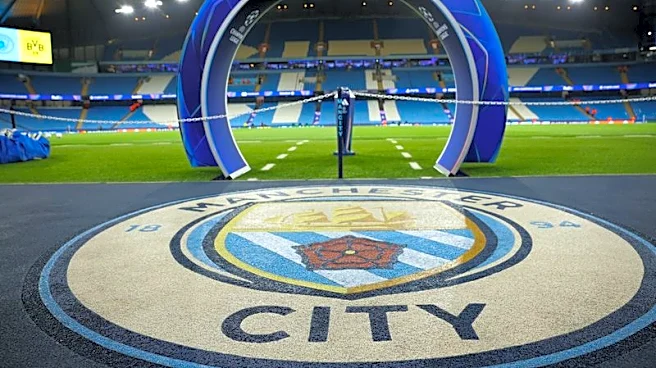
Manchester City is currently engaged in an appeal process regarding 115 charges from the Premier League concerning alleged breaches of financial rules between 2009 and 2018. Reports indicate that an independent tribunal has made decisions in the case,
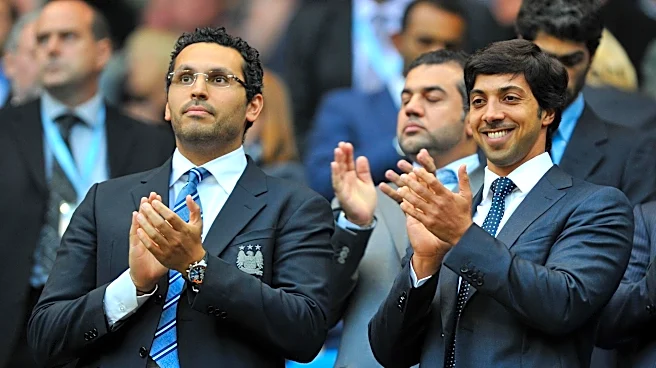
and the process is now moving to the appeal stage. The club has consistently maintained its innocence, asserting that it possesses irrefutable evidence to refute the allegations. This legal battle is a continuation of past disputes, including a 2014 fine from UEFA for financial fair play violations and a 2020 European competition ban that was later overturned by the Court of Arbitration for Sport. The core of the current charges revolves around accusations that City's owners injected excessive funds into the club, disguising them as sponsorship income. The club's chairman, Khaldoon Al Mubarak, has expressed strong determination to clear the club's name, indicating a prolonged legal fight.
Why It's Important?
This ongoing legal dispute carries significant implications for Manchester City's reputation, financial standing, and future in professional football. If the appeal is unsuccessful, the club could face severe sanctions, potentially impacting its ability to compete at the highest levels. The case also raises broader questions about financial fair play regulations in sports and the transparency of club ownership and funding. For the Premier League, the outcome will set a precedent for how financial misconduct is addressed, potentially influencing the integrity and competitive balance of the league. The dispute also has a geopolitical dimension, as the relationship between Abu Dhabi, where City's owners are based, and the United Kingdom could be tested depending on the final judgment. The case highlights the complexities of regulating international investments in sports and the challenges of enforcing financial rules across different jurisdictions.
What's Next?
The immediate next step is the hearing of Manchester City's appeal by a new three-person panel. Should this appeal go against the club, they will not be able to escalate the matter to the Court of Arbitration for Sport, as they did in a previous UEFA case. However, there is a strong possibility that City's owners would then pursue legal action in the High Court to continue their efforts to clear the club's name. The club's chairman has publicly stated their unwavering commitment to proving their innocence, suggesting that the legal process could extend for several years. The full judgment of the independent tribunal is yet to be released, and its contents will likely inform the strategies of both Manchester City and the Premier League in the subsequent stages of this protracted legal battle. The football world will be closely watching for the outcome, as it could significantly alter the landscape of English football.
Beyond the Headlines
The Manchester City financial charges case delves into deeper ethical and legal considerations surrounding the financing of elite sports clubs. The allegations of disguising owner funding as sponsorship income touch upon the integrity of financial fair play rules, which are designed to promote financial stability and competitive balance within leagues. The origin of the evidence, reportedly obtained illegally by a Portuguese hacker, introduces a complex legal and ethical dilemma regarding the admissibility and use of such information in legal proceedings. The club's argument that these leaked documents are 'out-of-context materials purportedly hacked or stolen' and part of an 'organised and clear attempt to damage the club's reputation' highlights the challenges of maintaining impartiality and fairness in high-stakes legal battles. This case could ultimately redefine the boundaries of financial oversight in professional football and influence how clubs are held accountable for their financial practices, potentially leading to stricter regulations and enforcement mechanisms across the sport.