







What's Happening?
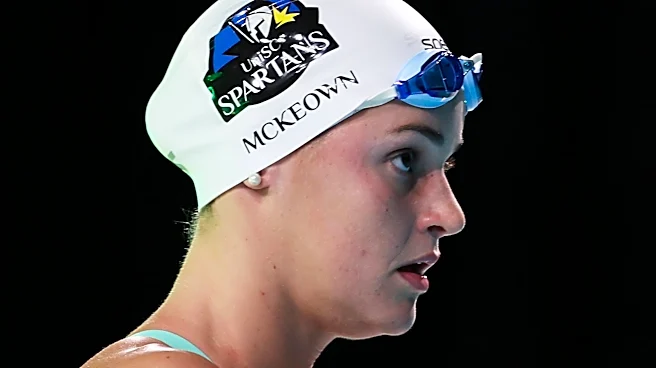
Kaylee McKeown, a prominent Australian Olympic and World Champion swimmer, was notably absent from the recent Australian Championships. Her absence, alongside other key international swimming figures such as Mollie O'Callaghan, Kyle Chalmers, and Cameron
McEvoy, has been highlighted in a comparative analysis of short course national championships across the United States, Australia, and China. These championships, held in 25-meter pools, featured a format of heats and finals without semifinals. The United States' trials, held in Westmont, showcased strong performances, with the top ten technical performances all attributed to American swimmers. Meanwhile, the Australian championships took place in Sydney, and China's in Beijing. The absence of these top-tier athletes from the Australian event is considered a significant factor when evaluating the comparative performances of the three nations in these short course competitions.
Why It's Important?
The absence of elite swimmers like Kaylee McKeown from national championships can significantly impact the perceived strength and depth of a country's swimming program on the international stage. When top athletes do not compete, it can skew comparative analyses of national performances, potentially understating a nation's overall swimming prowess. For the U.S., the strong showing at their trials, with American swimmers dominating the top technical performances, reinforces its position as a leading force in global swimming. This comparison is crucial for national federations and coaches to assess their competitive standing, identify emerging talent, and strategize for future international events like the Olympics and World Championships. The participation of star athletes often drives viewership and interest in national events, and their absence can affect the sport's visibility and commercial appeal within their home country.
What's Next?
Looking ahead, the focus will likely shift to the return of Kaylee McKeown and other absent champions to major international competitions. Their next appearances will be closely watched to assess their form and readiness for upcoming global events. National swimming federations will continue to analyze the results from these short course championships to identify areas for development and to prepare their athletes for the long course season, which typically features the most prestigious international competitions. The performances of emerging talents at these national events will also be monitored as potential indicators of future Olympic and World Championship contenders. The competitive landscape will evolve as these top swimmers reintegrate into the international circuit, setting the stage for future rivalries and record-breaking attempts.
Beyond the Headlines
The decision of elite athletes to skip national championships can stem from various factors, including strategic training cycles, injury management, or personal reasons. Such choices highlight the individualized approach top athletes take to their careers, often prioritizing peak performance at major international events over every national competition. This trend can spark discussions within the swimming community about the balance between national representation and individual athlete well-being and career longevity. Furthermore, the comparative analysis of national championships underscores the global nature of competitive swimming, where performances in one country are often benchmarked against others. This constant comparison fuels innovation in training methodologies and athlete development programs worldwide, pushing the boundaries of human performance in the sport.