




What's Happening?
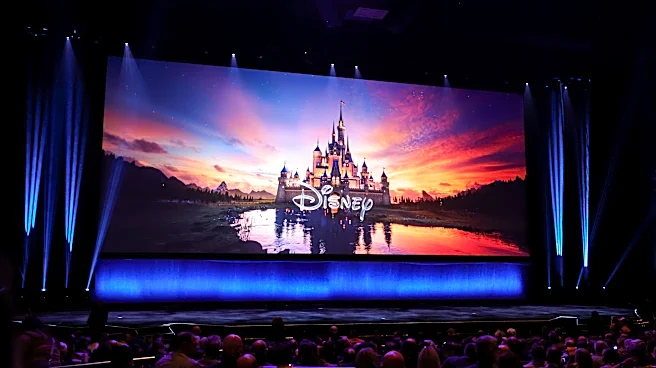
Walt Disney has expanded its collaboration with Adobe through a multi-year artificial intelligence (AI) partnership. This agreement aims to integrate AI across various facets of Disney's operations, ranging from its theme parks to ESPN. The primary objective
of this deepened partnership is to enhance the efficiency of Disney's content operations. According to Simply Wall St, this move is part of Disney's strategy to leverage its intellectual property (IP) flywheel, exemplified by franchises like 'Toy Story,' which has generated over $4 billion in box office revenue, more than 2 billion streaming hours, and over $1 billion in annual global retail sales. This IP flywheel is crucial for feeding new content, merchandise, and 'Experiences' attractions, supporting multi-year growth in revenue and operating income. Despite recent share price gains, longer-term investors are still awaiting a fuller recovery, with the company's fair value estimated at $126.61, suggesting it is currently undervalued.
Why It's Important?
This strategic AI partnership between Walt Disney and Adobe is significant for several reasons. For Disney, it represents a proactive step to modernize and streamline its vast content creation and distribution ecosystem. By integrating AI into theme parks and ESPN, Disney aims to enhance customer experiences and operational efficiencies, potentially leading to increased revenue and profitability. For the broader U.S. technology and entertainment industries, this collaboration highlights the growing importance of AI in driving innovation and competitive advantage. Adobe, as a key technology provider, stands to gain significant market validation and expanded influence within the media sector. Investors will be closely watching how this AI integration impacts Disney's financial performance, particularly in managing streaming ad softness and addressing consumer weakness in key Asian parks. The success of this partnership could set a precedent for how other large entertainment conglomerates adopt AI to leverage their existing IP and expand their market reach.
What's Next?
The multi-year AI partnership between Walt Disney and Adobe will likely involve a phased implementation of AI technologies across Disney's diverse business units. This could include developing AI-powered tools for content creation, personalized marketing, operational management in theme parks, and data analytics for ESPN. The immediate focus will be on integrating these AI solutions to improve efficiency and enhance user experiences. Disney will need to closely monitor the impact of these AI initiatives on its financial metrics, especially in areas like streaming service profitability and international park attendance. The company's ability to effectively leverage AI to mitigate challenges such as streaming ad softness and regional market fluctuations will be crucial for its long-term growth. Success in this partnership could lead to further AI investments and collaborations, potentially influencing industry-wide adoption of similar technologies.
Beyond the Headlines
Beyond the immediate business implications, Disney's deepened AI partnership with Adobe touches upon broader themes of technological transformation in creative industries. The integration of AI into content operations raises questions about the future of creative work, the balance between human creativity and algorithmic efficiency, and the ethical considerations surrounding AI-generated content. For consumers, AI could lead to more personalized and immersive experiences in theme parks and across Disney's media platforms. However, it also brings challenges related to data privacy and the potential for algorithmic bias. This partnership underscores the ongoing shift towards data-driven decision-making and automation in entertainment, prompting a re-evaluation of traditional production workflows and consumer engagement strategies. The long-term success of this venture will depend not only on technological prowess but also on Disney's ability to navigate these complex ethical and societal considerations.