





What's Happening?
Chainlink, a decentralized oracle network, announced on November 17, 2026, that its infrastructure has enabled $37.038 trillion in transaction value. This figure represents the total USD value associated with transactions that utilize a Chainlink oracle,
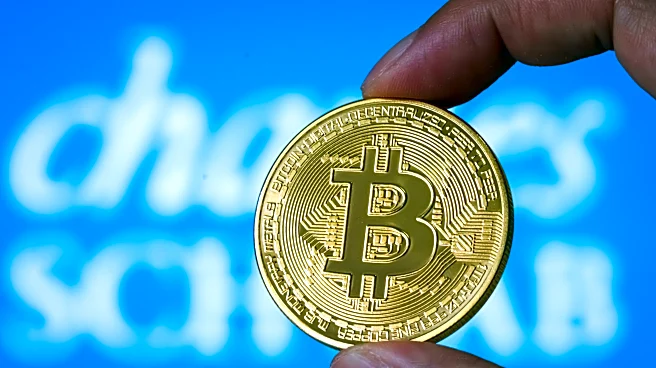
serving as an operational metric for the network's reach rather than a direct indicator of revenue or profit for LINK token holders. The network provides infrastructure for data, cross-chain interoperability, compliance, and connectivity in on-chain finance, with major financial institutions and decentralized finance protocols like Swift, Euroclear, Mastercard, UBS, and Aave reportedly using its standards. Additionally, Charles Schwab recently expanded its crypto offerings on November 9, adding Chainlink, Solana, and Avalanche to its Schwab Crypto platform, alongside Bitcoin and Ether. This service is available to eligible U.S. clients, excluding those in New York, Louisiana, and U.S. territories.
Why It's Important?
The reported $37 trillion in enabled transaction value by Chainlink highlights the growing integration of decentralized oracle networks within the broader financial ecosystem. This significant figure underscores the increasing reliance of both traditional financial institutions and decentralized finance protocols on Chainlink's infrastructure for secure and reliable data feeds. For the U.S. market, Charles Schwab's decision to include Chainlink in its crypto offerings signifies a mainstreaming of digital assets and blockchain technology. This move by a major brokerage firm could broaden access for U.S. investors to cryptocurrencies, potentially increasing their exposure to the digital asset market. While this expansion enhances Chainlink's visibility and adoption, the direct impact on the LINK token's demand and price remains a key consideration for investors, as the network's operational success does not automatically translate to token value appreciation.
What's Next?
The continued expansion of Chainlink's infrastructure and its adoption by major financial players suggest a trend towards greater integration of blockchain technology in mainstream finance. Future developments will likely focus on how this increased network activity translates into tangible benefits for LINK token holders, especially given the distinction between network utility and token economics. For U.S. investors, the availability of Chainlink and other cryptocurrencies through platforms like Charles Schwab could lead to increased trading volumes and potentially influence regulatory discussions surrounding digital assets. The ongoing evolution of Chainlink's services, such as the recently introduced Chainlink 24/7 for continuous market data, indicates a commitment to enhancing its offerings and solidifying its role in the tokenized asset market. The impact of these developments on the broader U.S. financial landscape and the regulatory environment for cryptocurrencies will be closely watched.
Beyond the Headlines
The substantial transaction value enabled by Chainlink points to a fundamental shift in how financial data is accessed and utilized, moving towards more decentralized and transparent systems. This development raises questions about the future of traditional financial intermediaries and the potential for blockchain-based solutions to streamline operations and reduce costs. The inclusion of Chainlink on a platform like Charles Schwab also highlights a growing acceptance of digital assets within established financial frameworks, potentially paving the way for more widespread institutional adoption. However, the distinction between the utility of a blockchain network and the investment case for its native token remains a critical point. Investors must navigate the complexities of token economics, competition, and market volatility, even as the underlying technology gains traction. This evolving landscape presents both opportunities and challenges for U.S. financial markets and regulatory bodies.