







What's Happening?
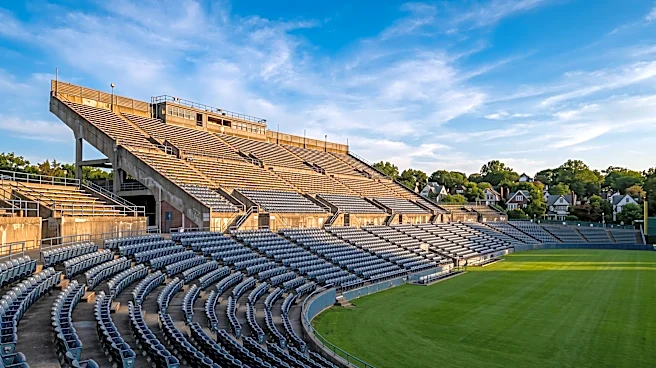
Forest Hills Stadium in Queens, New York, has reached a settlement with the Forest Hills Gardens Corporation, a neighborhood group, ensuring its ability to host up to 28 concerts per season through 2040. This agreement resolves years of disputes and pending
litigation stemming from neighbor complaints about noise and traffic disruptions caused by the concerts. The settlement, announced jointly by the Gardens Corporation, the stadium's owner West Side Tennis Club, and operator Tiebreaker Productions, includes financial provisions. Tiebreaker Productions will make "substantial payments" to the neighborhood group for each show, starting at $15,000 for the first four years and increasing to $18,000. Additionally, a one-time upfront payment of $275,000 will be provided, with a portion allocated for "restoration and beautification projects" in the neighborhood. The deal also stipulates a curfew for amplified sound and designates specific routes for concert traffic, moving rideshare pickups outside the Forest Hills Gardens area. The Gardens Corporation's board, which campaigned on ending the stadium litigation, praised the agreement for establishing clear and enforceable protections for residents.
Why It's Important?
This settlement is critically important for both the cultural landscape of New York City and the dynamics of urban development and community relations. For Forest Hills Stadium, it secures its long-term viability as a significant concert venue, preserving a historical site that contributes to the city's vibrant entertainment scene. This ensures continued economic activity, job creation, and cultural offerings for residents and tourists. For the Forest Hills Gardens community, the agreement provides much-needed relief and formalizes protections against disruptions, demonstrating that community concerns can be addressed through negotiation rather than prolonged legal battles. The financial compensation and traffic management stipulations offer tangible benefits to the neighborhood, potentially improving quality of life and fostering a more harmonious coexistence between the venue and its neighbors. This case also sets a precedent for how large-scale entertainment venues can operate within residential areas, highlighting the importance of proactive community engagement and structured agreements to mitigate negative impacts. It underscores the delicate balance between promoting cultural events and preserving residential tranquility, offering a model for similar urban planning challenges across the U.S.
What's Next?
With the settlement in place, Forest Hills Stadium will proceed with its concert scheduling, adhering to the newly established terms regarding sound curfews and traffic management. The Forest Hills Gardens Corporation will begin receiving the agreed-upon payments, which will be utilized for community restoration and beautification projects. Both parties will likely monitor the implementation of the agreement to ensure compliance and address any unforeseen issues that may arise. The success of this long-term arrangement could serve as a blueprint for other urban venues facing similar community opposition, encouraging more collaborative approaches to conflict resolution. Future concert seasons at the stadium will be observed to see how effectively the new traffic and sound regulations alleviate neighborhood concerns. This agreement also allows the stadium to plan its programming with greater certainty, potentially attracting more high-profile artists and events, further solidifying its reputation as a premier outdoor venue. The focus will now shift from litigation to fostering a cooperative relationship between the venue and its surrounding community.
Beyond the Headlines
The Forest Hills Stadium settlement delves into the complex interplay between urban development, cultural preservation, and community rights. Beyond the immediate benefits of noise reduction and traffic management, this agreement highlights the evolving understanding of what constitutes a 'livable' urban environment. It underscores the ethical responsibility of large institutions, even those providing significant cultural value, to integrate respectfully within their residential surroundings. The financial compensation and beautification projects signify a recognition of the community's intangible losses, such as peace and quiet, and an attempt to restore a sense of balance. This case also reflects a broader societal trend where local communities are increasingly empowered to challenge and negotiate with powerful entities, advocating for their quality of life. It raises questions about the long-term sustainability of large-scale entertainment venues in densely populated areas and the need for innovative solutions that allow for both cultural vibrancy and residential harmony. The resolution at Forest Hills Stadium could influence zoning laws, urban planning strategies, and community engagement practices for similar venues nationwide, fostering a more integrated and considerate approach to urban cultural development.