







What's Happening?
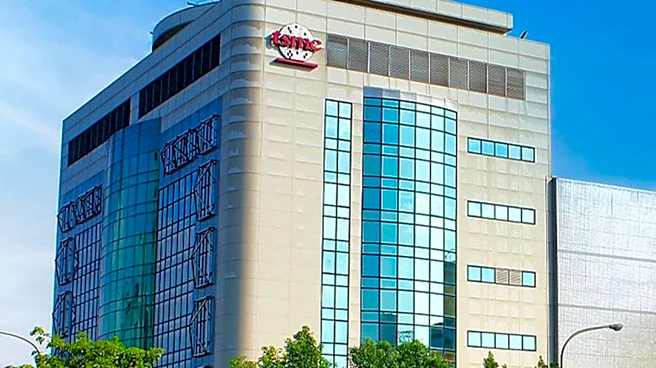
Taiwan Semiconductor Manufacturing Company (TSMC), the world's largest semiconductor foundry, is leveraging its market position to increase prices for its advanced chipmaking nodes by 5% to 10%. This decision comes amid overwhelming demand for its chips,
particularly those used in artificial intelligence (AI) applications. TSMC's advanced nodes, which are 7-nanometer and smaller, are crucial for manufacturing AI chips for data centers, smartphones, and personal computers. The company has already begun implementing these price hikes, which were not anticipated just a month ago. This move is expected to significantly impact TSMC's financial performance, with analysts predicting a strong likelihood that the company's second-quarter earnings per share will exceed the $3.83 consensus estimate, marking a 55% year-over-year increase.
Why It's Important?
The price hikes by TSMC underscore the company's strong pricing power and its pivotal role in the global semiconductor ecosystem. As the demand for AI accelerators and high-performance computing chips continues to grow, TSMC's ability to command higher prices for its advanced nodes positions it to potentially exceed Wall Street's growth expectations. This development is significant for the semiconductor industry, as it highlights the ongoing supply constraints and the increasing value of cutting-edge chip technology. TSMC's financial performance could set a precedent for other semiconductor companies, influencing stock market trends and investor confidence in the sector.
What's Next?
TSMC's upcoming second-quarter results, expected to be released on July 16, could further validate the company's pricing strategy and market dominance. Analysts are closely watching to see if TSMC's earnings growth will outpace the anticipated 49% increase, driven by the strong demand for its advanced nodes. The company's guidance for the third quarter and beyond will be critical in assessing the long-term impact of its pricing decisions. Additionally, TSMC's continued expansion of advanced fabrication facilities to meet high-performance computing and smartphone market demands will be a key area of focus for industry stakeholders.