





What's Happening?
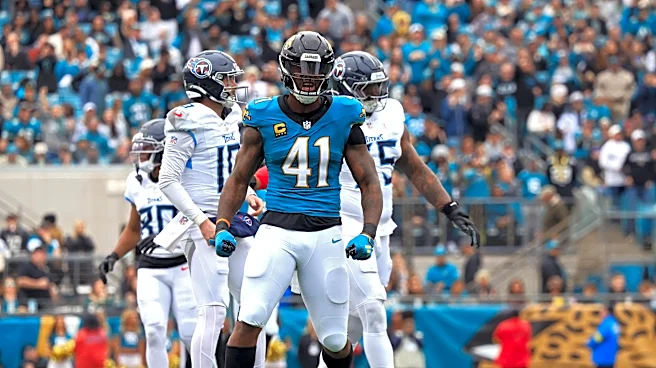
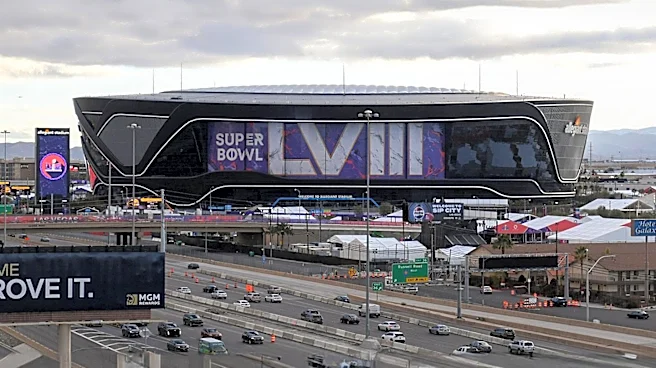
Jacksonville Jaguars owner Shahid Khan has expressed doubts about Jacksonville's capacity to host a Super Bowl, citing a lack of necessary infrastructure, including hotel rooms. This statement comes despite a $775 million stadium deal, approved by the
city council in 2024, which was promoted to taxpayers as an investment that could lead to hosting a Super Bowl. Khan's previous remarks, stating that a Super Bowl requires significant infrastructure beyond the stadium, such as hotel rooms, contradict the economic impact study commissioned by the Jaguars. This study projected a $21.7 billion economic impact over 30 years, a figure economists have criticized as exaggerated and more akin to 'propaganda' than an accurate representation. The city's hotel shortage was notably evident during Super Bowl XXXIX in 2005, when cruise ships were used to accommodate visitors.
Why It's Important?
The discrepancy between the Jaguars' economic impact study and owner Shahid Khan's assessment of Jacksonville's infrastructure highlights a critical issue in public funding for sports facilities. The use of potentially inflated economic projections to justify significant taxpayer investment raises questions about transparency and accountability in such deals. If Jacksonville genuinely lacks the infrastructure for a Super Bowl, as Khan suggests, then the primary justification for the stadium deal—hosting major events—is undermined. This situation could lead to a misallocation of public funds, with taxpayers potentially bearing the cost of a stadium that may not deliver on its most ambitious promises. The reliance on existing events like the Florida-Georgia game and Monster Jam in the economic forecast, rather than new economic drivers, further inflates projected benefits without guaranteeing new revenue streams, impacting the city's financial health and public trust.
What's Next?
The ongoing debate surrounding Jacksonville's stadium deal and its potential to host a Super Bowl will likely continue to draw scrutiny from economists and the public. The city's efforts to address the hotel shortage, including incentives for a luxury Four Seasons hotel, will be closely watched for their effectiveness and cost to taxpayers. With the Jaguars playing a reduced number of home games due to renovations, the economic impact of the stadium deal will be under immediate evaluation. Future discussions will likely focus on whether the promised economic benefits materialize and if Jacksonville can indeed develop the necessary infrastructure to host a Super Bowl, or if the investment will primarily benefit the team without significant broader community gains. The outcome could influence future public-private partnerships for sports infrastructure in other U.S. cities.
Beyond the Headlines
This situation in Jacksonville reflects a broader national trend where cities invest heavily in sports infrastructure, often with significant public subsidies, based on economic impact studies that are frequently challenged by independent economists. The ethical implications of using potentially inflated projections to secure taxpayer funding for private sports franchises are substantial. It raises questions about the balance of power between sports organizations and local governments, and the extent to which public resources should be used to support private enterprises. The long-term financial health of cities can be significantly impacted by such deals, potentially diverting funds from other critical public services. This case could serve as a cautionary tale, prompting other municipalities to conduct more rigorous and independent economic analyses before committing to similar large-scale sports infrastructure projects.