






What's Happening?
Herman Miller, now MillerKnoll Inc., a renowned furniture company from Zeeland, Michigan, has a rich history shaped by D.J. DePree, the son-in-law of the company's namesake, Herman Miller. DePree took over the Michigan Star Furniture Co. in the 1920s,
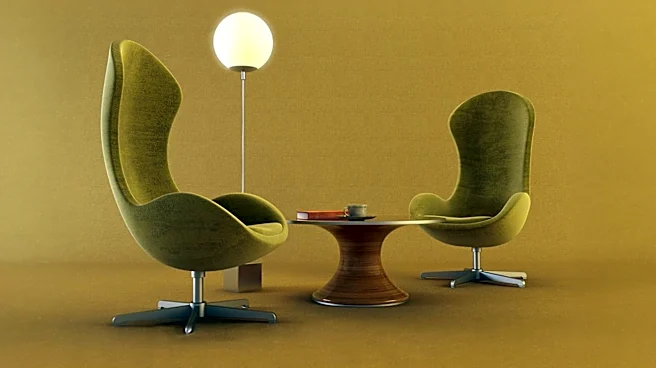
renaming it Herman Miller Furniture Co. He transformed the business from making traditional reproductions to embracing modern design, notably during the Great Depression. A pivotal moment was his collaboration with designer Gilbert Rohde in 1930, who convinced DePree to focus on functional, modern furniture for contemporary living spaces. This shift was further solidified by later collaborations with iconic designers like George Nelson and Charles and Ray Eames, who introduced distinctive designs and the concept of molded plywood furniture. DePree also integrated a philosophy of 'participative management,' believing in the value and contributions of all employees, a principle influenced by his personal reflections and the work of Dr. Carl Frost.
Why It's Important?
The transformation of Herman Miller under D.J. DePree illustrates how visionary leadership and a willingness to embrace innovation can redefine an industry. His decision to pivot from traditional furniture to modern design, especially during an economic downturn, was a bold move that set the company apart and established its reputation for design excellence. The emphasis on 'participative management' also highlights a progressive approach to corporate culture, recognizing the importance of employee engagement and contribution, which was ahead of its time. This philosophy not only fostered a more collaborative environment but also likely contributed to the company's long-term success and resilience. Herman Miller's story serves as a case study for how a U.S. business can achieve enduring influence by combining design innovation with strong ethical and management principles.
What's Next?
Herman Miller, now MillerKnoll Inc., continues to be a leader in the design furniture industry, building on the legacy established by D.J. DePree and his collaborators. The company's commitment to innovative design and a human-centered approach to work environments is likely to persist, influencing future product development and corporate strategy. The principles of participative management and valuing employee contributions remain relevant in today's evolving workplace, suggesting that these foundational philosophies will continue to guide the company's operations. As the company expands globally and adapts to new market demands, its historical emphasis on design, quality, and ethical leadership will likely remain central to its brand identity and competitive advantage.
Beyond the Headlines
The narrative of Herman Miller extends beyond business success to touch upon broader themes of American industrial innovation and the evolution of design. D.J. DePree's personal journey, from a traditional businessman to a proponent of modern design and progressive management, reflects a shift in American corporate thought during the 20th century. The company's embrace of designers like Rohde, Nelson, and the Eameses not only produced iconic furniture but also democratized good design, making it accessible to a wider audience. This story also subtly explores the intersection of personal values and business ethics, as DePree's Christian beliefs influenced his management philosophy. Herman Miller's enduring impact lies not just in its products, but in its contribution to shaping modern living and working spaces, and its pioneering role in demonstrating that good design and good business can go hand in hand.