



What's Happening?
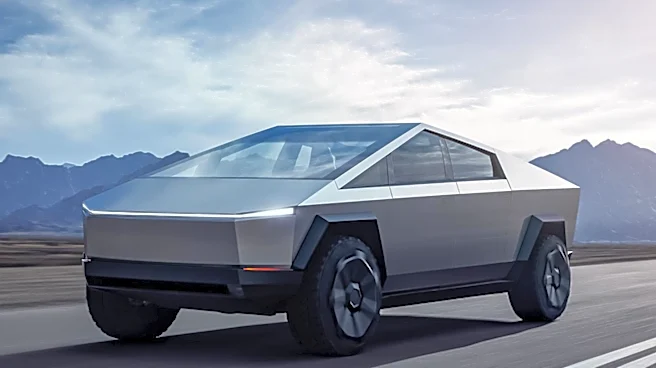
Tesla has announced the integration of Starlink satellite internet into its Cybercab vehicles, marking a significant step in the company's efforts to enhance connectivity for its self-driving robotaxis. The integration was showcased with a Starlink antenna
built into the vehicle's rear, allowing for high-speed internet access even in areas with poor cellular coverage. Tesla CEO Elon Musk has suggested that all vehicles will eventually feature Starlink, emphasizing its potential to provide high bandwidth to billions of vehicles. The Cybercab, designed as a self-driving vehicle without traditional controls, aims to offer passengers seamless internet access for navigation and entertainment.
Why It's Important?
The integration of Starlink into Tesla's Cybercab represents a convergence of automotive and satellite technologies, potentially setting a new standard for vehicle connectivity. This development could significantly enhance the functionality of self-driving vehicles, particularly in remote or underserved areas where cellular networks are unreliable. For Tesla, this move strengthens its position in the autonomous vehicle market by offering a unique value proposition. Additionally, the broader adoption of satellite internet in vehicles could drive competition among telecom providers and accelerate advancements in satellite technology.
What's Next?
Tesla plans to expand Starlink integration across its vehicle lineup, focusing on markets where Starlink is active. The company will continue to refine its technology to ensure reliable connectivity for navigation and fleet management. As Tesla advances its autonomous vehicle capabilities, it may face regulatory challenges and competition from other automakers and telecom providers. The success of this initiative will depend on Tesla's ability to maintain high-speed internet access and address any technical or regulatory hurdles that arise.