




What's Happening?
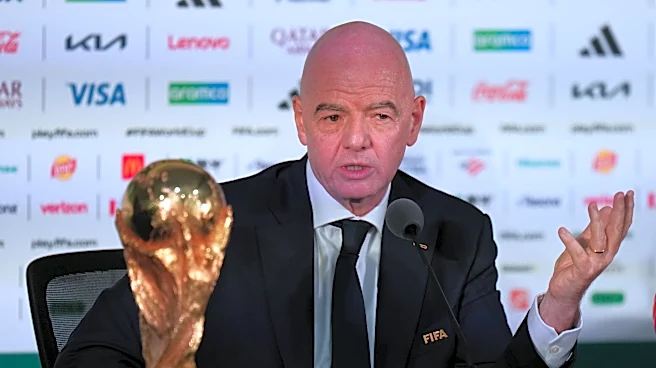
FIFA President Gianni Infantino has proposed selling shares of the World Cup to private investors, a move that has sparked significant controversy. Infantino described the proposal as part of a democratic consultation process, offering it as an opportunity
rather than an obligation. The plan involves setting a deadline for the 211 member associations to decide by September 19, 2026. If at least 106 associations agree, FIFA could distribute significantly more funds to its members starting next year. However, the proposal has met with resistance, particularly from UEFA, which is considering a boycott of the World Cup. UEFA has criticized the plan as a breach of football's core values, emphasizing that the sport's leadership and soul should not be commodified. The proposal has also drawn criticism from CONCACAF, which highlighted concerns over the transparency of the process.
Why It's Important?
The proposal to sell World Cup rights to investors could have far-reaching implications for international football governance and the financial landscape of the sport. If implemented, it could significantly increase FIFA's financial resources, allowing for greater investment in global football development. However, the plan risks alienating key stakeholders like UEFA, which could lead to a fragmented international football community. A potential boycott by UEFA could diminish the prestige and competitive quality of the World Cup, affecting its global viewership and commercial appeal. The controversy also raises ethical questions about the commercialization of sports and the transparency of decision-making processes within major sports organizations.
What's Next?
UEFA is expected to hold an emergency meeting to discuss its response to FIFA's proposal, including the possibility of a World Cup boycott. The outcome of this meeting could influence other regional football associations' stances on the issue. FIFA will need to navigate these tensions carefully to avoid a significant rift within the global football community. The decision by the member associations, due by September 19, will be crucial in determining the future direction of FIFA's financial strategy and its relationship with key stakeholders.
Beyond the Headlines
The proposal highlights a broader trend of increasing commercialization in sports, where financial considerations often clash with traditional values and governance structures. This situation underscores the need for transparency and accountability in sports administration, as well as the importance of maintaining the integrity and spirit of the game. The outcome of this proposal could set a precedent for how major sports events are funded and managed in the future.