
What's Happening?
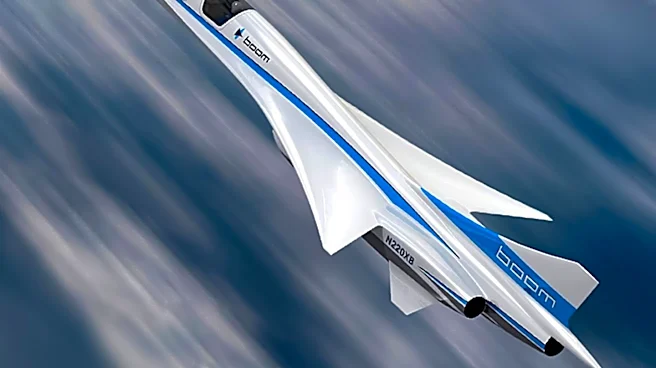
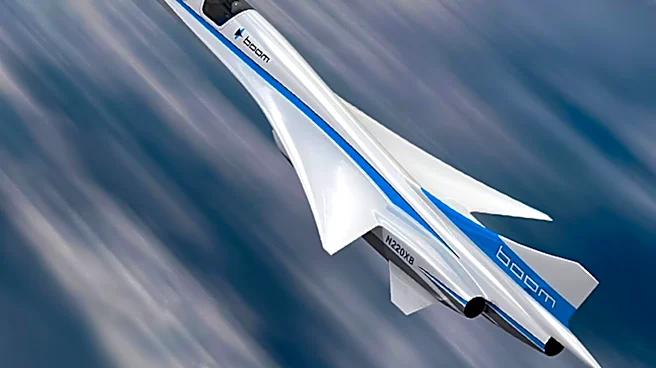
Boom Supersonic successfully conducted the first test firing of the integrated core of its Symphony engine on November 21. This engine is being developed for two distinct applications: the Overture supersonic
passenger aircraft and Superpower, a natural-gas turbine designed to power AI data centers. The test, which took place at the company's Colorado Air and Space Port facility, saw the engine core reach 6,500 rpm, with nearly 2,000 sensors collecting real-time data. This 'Sprint Core' is a central component for both the Symphony and Superpower versions, sharing over 75% of their components. The Superpower version, a 42 MW gas turbine, will not include a fan, instead using hot gases to drive a separate turbine connected to an electric generator. This dual-purpose engine strategy aims to fund the Overture project and gather real-world operational data before the supersonic airliner takes flight.
Why It's Important?
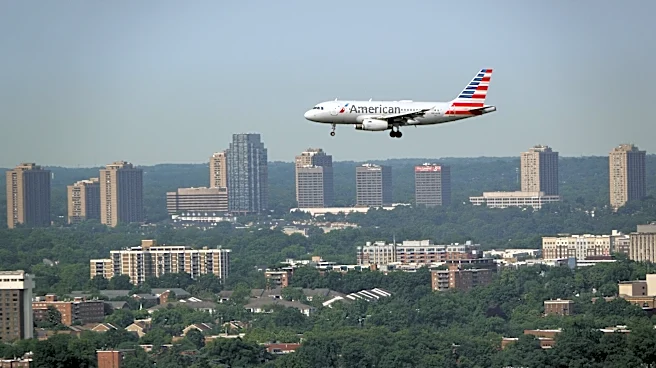
This development is significant for the U.S. aviation and technology sectors. For aviation, it marks a crucial step towards the return of supersonic passenger travel, a capability absent since the Concorde's retirement in 2003. Boom Supersonic's Overture aircraft, designed to carry 60-80 passengers at Mach 1.7, has already secured 130 orders and provisional orders from major U.S. carriers like United Airlines and American Airlines, alongside Japan Airlines. The integration of the engine core into a power generation unit for AI data centers addresses a growing demand for electricity in the rapidly expanding AI industry. This innovative approach allows Boom Supersonic to generate revenue and gain operational experience, potentially de-risking the Overture project and accelerating its development without solely relying on traditional aerospace funding models. The company's in-house manufacturing of critical components, such as turbine blades, also highlights a trend towards vertical integration in specialized U.S. manufacturing.
What's Next?
Boom Supersonic plans to gradually increase the load on the Sprint Core prototype over the coming months. Full-scale testing of the completed Symphony engine is anticipated around mid-2027. The company expects to begin delivering Superpower turbines to customers in mid-2027, with production targets of 25 units per year by 2028 and 50 units in 2029. While the Overture aircraft was initially targeted for a 2029 launch, company officials have indicated it may appear one or two years later. The commercial operation of Superpower is expected to provide valuable practical experience and reliability data that will directly inform the development of the Symphony engine for the Overture. This dual-track development strategy aims to create a sustainable financial model for the ambitious supersonic flight project.
Beyond the Headlines
The dual-application strategy for Boom Supersonic's engine core represents a novel approach to financing high-risk, high-reward aerospace ventures. By tapping into the burgeoning demand for power in the AI data center market, the company is creating an independent revenue stream that could insulate it from the often-volatile aerospace investment landscape. This model could set a precedent for other innovative startups in capital-intensive industries. Furthermore, the company's decision to vertically integrate and manufacture key components in-house, rather than relying on external suppliers, reflects a broader shift in some U.S. manufacturing sectors towards greater control over supply chains and production quality. This could lead to increased domestic manufacturing capabilities and a reduction in reliance on global supply chains for critical technologies.