





What's Happening?
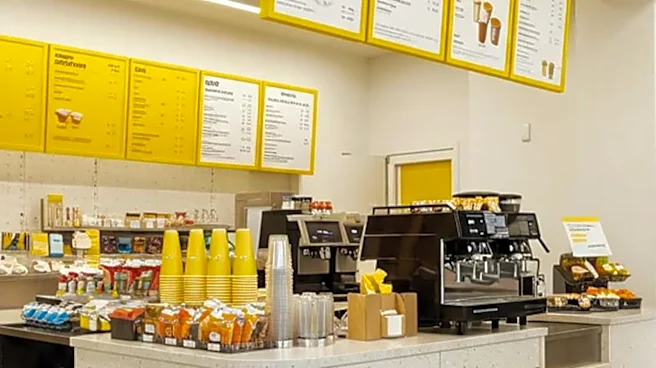
Circle K has launched its first-ever Circle K Café + Market in Kingsville, Ohio, marking a significant evolution in the company's food and beverage strategy. This new format aims to provide an elevated, fresh, and convenient dining experience for both
local residents and travelers. The store features an expanded made-to-order menu, fresh market offerings, and self-order kiosks to enhance customer convenience. According to Gary Brant, vice president of foodservice at Circle K, the initiative responds to customer expectations for quality food without compromising speed and convenience. This move signifies Circle K's commitment to enhancing its foodservice capabilities and adapting to changing consumer demands in the convenience store sector. The company aims to deliver a modern dining experience within its traditional convenience store model.
Why It's Important?
The introduction of the Circle K Café + Market is important as it reflects a broader trend in the convenience store industry towards offering more sophisticated and fresh food options. This strategic shift allows Circle K to compete more effectively with fast-casual restaurants and grocery stores, capturing a larger share of the food service market. By providing an elevated dining experience, Circle K can attract a wider customer base seeking quality meals on the go, potentially increasing foot traffic and sales. This innovation could set a new standard for convenience store offerings, influencing competitors to upgrade their food service models. For consumers, it means more diverse and higher-quality food choices available at convenient locations, enhancing their daily routines and travel experiences.
What's Next?
Following the debut of the Kingsville location, Circle K will likely monitor the performance and customer reception of its new Café + Market format. Successful implementation could lead to the expansion of this concept to other locations across the United States, potentially transforming the brand's image from a traditional convenience store to a more comprehensive food and beverage destination. The company may also refine its menu offerings and operational strategies based on feedback from the initial launch. Competitors in the convenience store and quick-service restaurant sectors will likely observe Circle K's progress, potentially leading to similar innovations in their own food service programs. This could spark a broader industry trend towards enhanced food offerings in convenience retail.
Beyond the Headlines
This strategic move by Circle K highlights a significant shift in consumer expectations regarding convenience and quality. The blurring lines between traditional convenience stores, quick-service restaurants, and even grocery stores suggest a future where consumers expect a wider array of services and products from a single, accessible location. This evolution could lead to a redefinition of the convenience store model, emphasizing fresh food, digital ordering, and a more curated shopping experience. The success of such formats could also impact local food economies, creating new opportunities for suppliers and potentially altering the competitive landscape for small businesses in the food service industry. It underscores a broader cultural trend towards valuing efficiency and quality in everyday consumption.