







What's Happening?
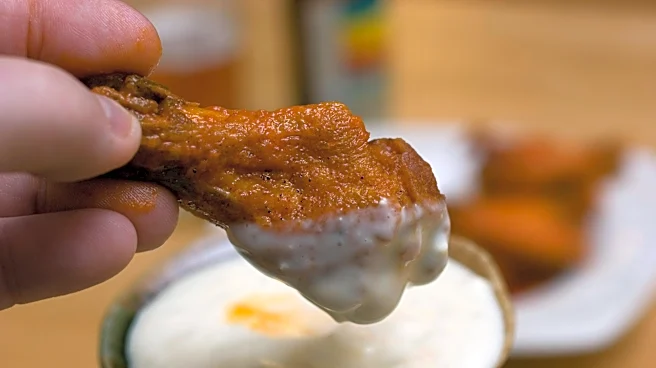
The ubiquitous Buffalo chicken wing, a staple in American cuisine, is being recognized as an 'American Object' in a recurring series marking the 250th anniversary of the United States. The article emphasizes that while Buffalo wings are found nationwide,
their true origin lies in Buffalo, New York. The original recipe was created by Teressa Bellissimo in March 1964 at the Anchor Bar, where it is still served today. The piece highlights the distinct characteristics of authentic Buffalo wings: a deep-fried crispy exterior drenched in vinegary hot sauce, coating tender meat, often accompanied by blue cheese dressing. The author, Pia Sarkar, deputy global business editor for The Associated Press, shares personal anecdotes about enjoying wings in Buffalo, noting that locals simply refer to them as 'wings.' The article also mentions other popular Buffalo wing establishments like Bar-Bill Tavern and Duff's Famous Wings, known for their varying spice levels.
Why It's Important?
The recognition of the Buffalo wing as an 'American Object' underscores its cultural significance and impact on the national culinary landscape. This designation not only celebrates a specific food item but also highlights the regional identity and pride associated with its origin city, Buffalo. For the food industry, it reinforces the enduring popularity and marketability of regional specialties that have achieved widespread appeal. The story also subtly promotes culinary tourism to Buffalo, encouraging food enthusiasts to experience the authentic version of the dish. Furthermore, it serves as a reminder of how local innovations can evolve into national phenomena, influencing food trends and consumer preferences across the country. The narrative also touches on the emotional connection people have with food, linking it to memories of home, family, and community.
What's Next?
The ongoing 'American Objects' series will continue to feature items that represent the diverse cultural fabric of the United States as the nation approaches its 250th anniversary. This ongoing recognition could lead to increased interest in the origins of other popular American foods and cultural artifacts. For Buffalo, this renewed attention to its signature dish may further boost its reputation as a culinary destination, potentially leading to increased tourism and local business opportunities for restaurants specializing in wings. The narrative could also inspire other cities to highlight their unique contributions to American culture and cuisine, fostering a broader appreciation for regional heritage. Food historians and cultural commentators may also delve deeper into the socio-economic factors that allowed the Buffalo wing to achieve such widespread popularity.
Beyond the Headlines
Beyond its culinary appeal, the Buffalo wing symbolizes the power of local innovation to create a global phenomenon. It represents a piece of Americana that has transcended its humble origins to become a staple in diverse settings, from sports bars to family dinners. The story also subtly touches on the concept of authenticity in food culture, contrasting the original Buffalo wing with its numerous imitations and spin-offs. This raises questions about how food traditions are preserved and adapted over time, and what constitutes a 'true' version of a dish. The emotional connection described by the author—associating the food with friends, family, and a beloved city—highlights the deeper role food plays in shaping personal and collective identity, extending beyond mere sustenance to become a symbol of community and belonging.