








What's Happening?
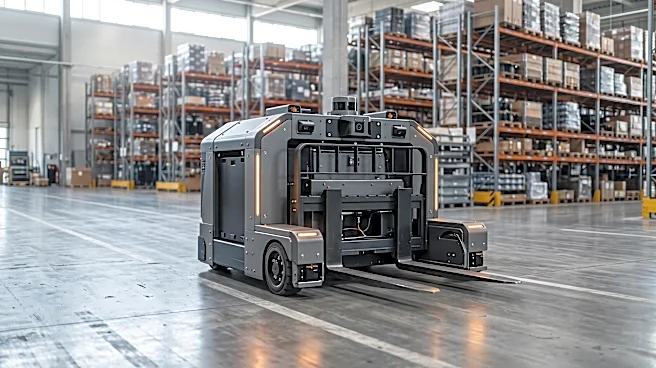
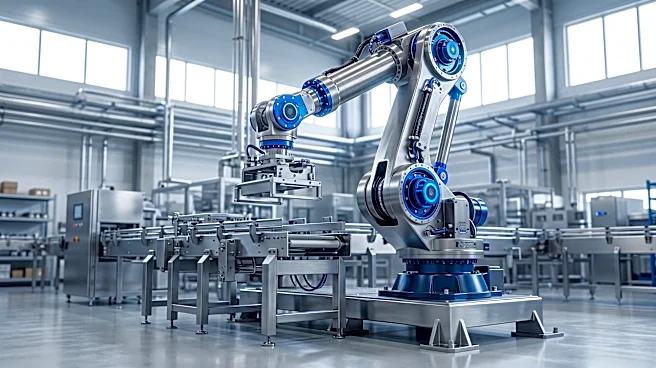
KION GROUP AG announced its financial results for the first nine months of fiscal year 2026, reporting a 3.9 percent increase in group revenue to €8.522 billion, up from €8.200 billion in 2025. This growth was primarily fueled by the Intelligent Automation
Solutions (IAS) segment, which saw a significant 16.9 percent rise in revenue to €2.519 billion. The IAS segment's strong performance was attributed to robust growth in its project business and a stable service business. In contrast, the Industrial Trucks & Services (ITS) segment experienced a slight revenue decrease to €6.034 billion, despite higher unit shipments, due to an increased share of entry-level warehouse trucks in its product mix. Overall, adjusted EBIT for the group increased by 9.9 percent to €632.5 million, resulting in an adjusted EBIT margin of 7.4 percent.
Why It's Important?
This financial report from KION GROUP AG highlights a significant trend in the industrial sector: the increasing importance of automation and intelligent solutions. The strong growth in the IAS segment indicates a rising demand for automated systems and services, which can enhance efficiency and productivity across various industries. For U.S. businesses, this trend suggests a continued shift towards adopting advanced automation technologies to remain competitive. Companies involved in logistics, manufacturing, and supply chain management may find themselves investing more in intelligent automation to streamline operations and reduce costs. The slight decline in the ITS segment's revenue, despite increased unit shipments, also points to potential market saturation or a shift in customer preferences towards more cost-effective, entry-level solutions, which could impact manufacturers and suppliers of traditional industrial trucks.
What's Next?
KION GROUP AG's continued focus on its Intelligent Automation Solutions segment is likely to drive future growth and innovation. The company's strategy suggests further investment in project business and service offerings within automation. For the broader market, this indicates a sustained demand for automation technologies, potentially leading to increased research and development in areas like robotics, artificial intelligence for logistics, and automated material handling. Businesses in the U.S. that are either consumers or providers of such technologies can anticipate a dynamic market with evolving demands and opportunities. The company will likely continue to monitor the performance of its ITS segment, potentially adjusting its product mix or market strategies to address the changing dynamics in the industrial truck market.
Beyond the Headlines
The financial performance of KION GROUP AG reflects a broader economic narrative where technological advancement, particularly in automation, is becoming a critical differentiator for industrial companies. This shift has profound implications for the workforce, potentially leading to a greater demand for skilled labor in automation design, implementation, and maintenance, while possibly reducing the need for manual labor in certain areas. Ethically, the increased reliance on automation raises questions about job displacement and the need for workforce retraining initiatives. Culturally, it signifies a move towards more technologically integrated industrial environments, where efficiency and data-driven decision-making are paramount. The long-term impact could reshape industrial landscapes, fostering new types of businesses and services centered around intelligent automation.