






What's Happening?
Publix, a prominent grocery chain, continues its practice of baking bread from scratch within its individual store bakeries. This in-store production includes popular items such as Italian five-grain, sourdough, French bread, baguettes, and hoagie rolls.
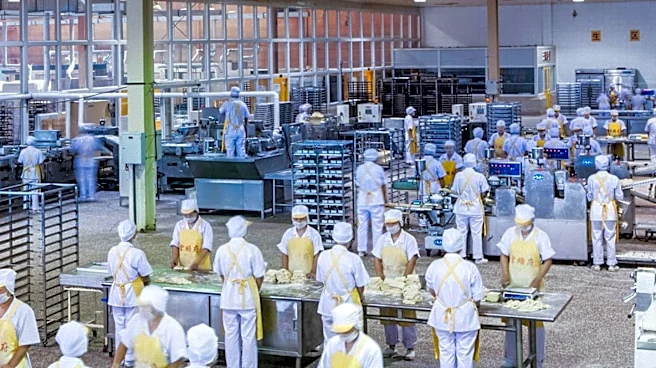
While many bread products are made fresh daily in stores, some baked goods, like certain cookies, muffins, and cupcakes, are produced at Publix's centralized bakery plants in Lakeland, Florida, and Atlanta. The Lakeland facility, spanning 225,000 square feet, is capable of producing 2,400 cookies per minute and 20,000 carrot bar cakes weekly. These centralized plants also prepare dough for thousands of other items that are then proofed and baked in individual stores. The company's commitment to in-store baking dates back to the 1950s when a Publix-specific bakery concept began to take hold, eventually leading to every new store featuring its own bakery department.
Why It's Important?
Publix's dual approach of in-store and centralized bakery production highlights a strategic balance between efficiency and consumer preference. By baking bread from scratch in stores, Publix leverages the appeal of fresh, artisanal products, which can enhance the shopping experience and foster customer loyalty. This strategy differentiates Publix from competitors who may rely solely on pre-baked or frozen products. The centralized bakeries, on the other hand, allow for economies of scale and consistent quality for high-volume items, ensuring a steady supply across all locations. This hybrid model enables Publix to cater to diverse consumer demands while maintaining operational effectiveness. The emphasis on fresh, in-store baked goods can also contribute to a positive brand image, associating Publix with quality and traditional baking methods.
What's Next?
Publix is likely to continue refining its bakery operations to optimize both in-store freshness and centralized production efficiency. The company may explore expanding its range of in-store baked items based on consumer demand and market trends, particularly for specialty breads and artisanal products. Investment in new baking technologies for both in-store and centralized facilities could further enhance product quality and production speed. Additionally, Publix might leverage its bakery's reputation for freshness in its marketing campaigns to attract more customers. The ongoing success of this hybrid model could influence other large grocery chains to adopt similar strategies, balancing the benefits of mass production with the consumer appeal of freshly made goods.
Beyond the Headlines
The Publix bakery model reflects a broader trend in the retail food industry where companies are seeking to combine the efficiency of large-scale production with the perceived authenticity and quality of local or in-house preparation. This approach addresses a growing consumer desire for transparency in food sourcing and preparation, as well as a preference for fresh, less processed options. The aroma of freshly baked bread, as noted in the source, creates an immersive sensory experience that can significantly influence customer perception and purchasing behavior, transforming a routine grocery trip into a more enjoyable event. This strategy also underscores the importance of skilled bakers and the craft of bread-making in a highly industrialized food landscape, preserving traditional techniques within a modern retail environment.