





What's Happening?
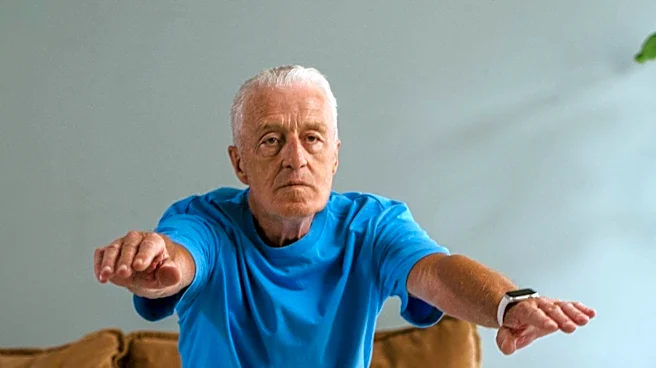
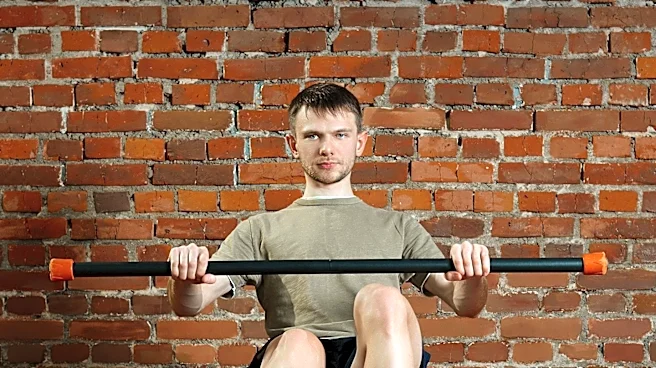
Bodyweight workouts are being highlighted as a crucial method for men over 50 to maintain physical strength, balance, mobility, and coordination. These exercises are not solely focused on building larger muscles but rather on preserving the physical abilities
essential for daily life, such as standing up, climbing stairs, and moving confidently. As individuals age, there is a natural decline in muscle mass and strength, a process that can accelerate after middle age. However, resistance training, including bodyweight exercises, has been consistently shown to improve strength and physical performance in older adults, with benefits observed even in those in their 70s and 80s. The approach emphasizes training for long-term capability rather than immediate aesthetic goals, providing a practical and accessible way to combat age-related physical decline without requiring a fully equipped gym.
Why It's Important?
The emphasis on bodyweight workouts for men over 50 is significant for public health and individual well-being in the U.S. As the population ages, maintaining physical independence becomes increasingly vital. The natural decline in muscle mass and strength can lead to reduced mobility, increased risk of falls, and a diminished quality of life. By promoting accessible bodyweight exercises, this initiative can help a large demographic proactively address these challenges. It offers a cost-effective and convenient solution for individuals who may not have access to gyms or specialized equipment, thereby broadening the reach of beneficial resistance training. This focus can lead to a healthier, more active older population, potentially reducing healthcare burdens associated with age-related physical decline and improving overall societal productivity and engagement among seniors.
What's Next?
Individuals interested in incorporating bodyweight exercises into their routine are advised to start with two to three sessions per week, selecting a combination of exercises that target the entire body. For instance, performing 2-3 sets of each exercise with 60-90 seconds of rest between sets is recommended. The focus should be on controlled, technically sound repetitions, starting at the lower end of suggested rep ranges. As strength improves, the recommendation is to increase the challenge by using a slower tempo, extending the range of motion, adding pauses, or progressing to more difficult variations, rather than simply increasing the number of repetitions. While bodyweight training is a valuable tool, it is also noted that for those who are already strong, incorporating dumbbells, resistance bands, or gym-based exercises can provide additional load for continued progression.
Beyond the Headlines
Beyond the immediate physical benefits, the promotion of bodyweight workouts for older adults touches upon broader societal implications regarding aging and independence. It challenges the conventional notion that physical decline is an inevitable and unalterable part of aging, instead advocating for proactive measures to maintain vitality. This shift in perspective can empower older individuals, fostering a sense of self-efficacy and encouraging continued participation in daily activities and community life. Ethically, it underscores the importance of accessible health solutions that do not require significant financial investment or specialized facilities, promoting equitable access to tools for healthy aging. Culturally, it could contribute to a redefinition of what it means to be 'old' in the U.S., moving towards a more active and engaged senior demographic.