



What's Happening?
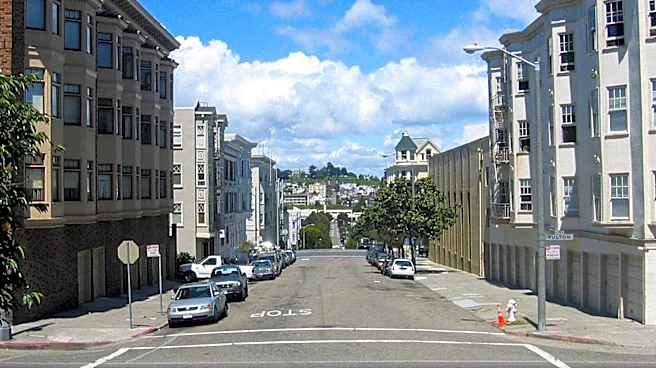
In San Francisco's Bellaire Tower, a historic Art Deco building, designer Caitlin Jones Ghajar has creatively transformed a one-bedroom apartment to maximize space and functionality. The apartment, located in the desirable Russian Hill neighborhood, was
short on space for a couple who intended to use it as a pied-à-terre. Ghajar's solution was to install a Murphy bed in the dining room, a novel approach that allows the space to serve multiple functions. The design also features a vibrant color palette described as 'accidentally Wes Anderson,' incorporating vintage items and a rainbow palette to create a lively and inviting atmosphere. The apartment's historic character was preserved, with careful attention to maintaining its original charm while enhancing its functionality.
Why It's Important?
This transformation highlights the growing trend of maximizing small living spaces in urban environments, particularly in cities like San Francisco where real estate is at a premium. By incorporating multifunctional furniture and vibrant design elements, the project demonstrates how limited space can be effectively utilized without sacrificing style or comfort. This approach is significant for urban dwellers who seek to maintain a high quality of life in compact living conditions. The use of vintage items also underscores a sustainable design philosophy, reducing the environmental footprint by repurposing existing materials. This project could inspire similar innovations in urban housing, promoting efficient use of space and sustainable design practices.
What's Next?
The success of this project may encourage other designers and homeowners to explore similar space-saving solutions in urban settings. As cities continue to grow and housing becomes more compact, the demand for innovative design solutions that maximize functionality and aesthetics is likely to increase. This could lead to a broader adoption of multifunctional furniture and sustainable design practices in urban housing markets. Additionally, the emphasis on preserving historical character while modernizing living spaces may influence future renovations in historic buildings, balancing the need for modern amenities with the preservation of architectural heritage.