






What's Happening?
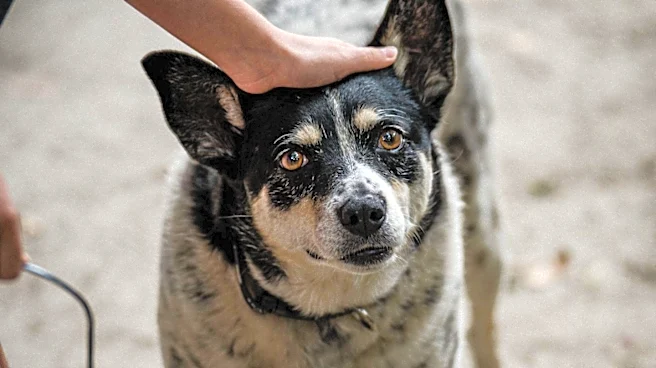
A new study highlights the 15,000-year evolutionary relationship between humans and dogs, emphasizing how both species have influenced each other's development. Archaeologist Professor Peter Mitchell's book, 'First Dogs: Hunter-Gatherers and their Canine
Companions from Prehistory to the Present,' explores the gradual domestication process of dogs. The study suggests that humans and wolves initially entered a mutual relationship, leading to the development of diverse dog breeds adapted to various environments and human needs. Dogs have evolved alongside humans, acquiring specialized traits for different climates and roles, such as sled dogs in the Arctic and hunting dogs in tropical regions.
Why It's Important?
The study provides insights into the deep historical and cultural connections between humans and dogs, highlighting the mutual influence on each other's evolution. Understanding this relationship can inform current practices in animal breeding, conservation, and the role of dogs in human society. The findings emphasize the adaptability of dogs and their significance in human history, from companionship to practical roles in hunting and transportation. This research contributes to the broader understanding of human-animal interactions and the co-evolution of species.