







What's Happening?
Intrinsic, a Google AI robotics company, has introduced the Intrinsic Intelligence Cell, a modular robot workcell designed to enhance manufacturing flexibility through software-defined automation. This innovation was showcased at Automate 2026, where
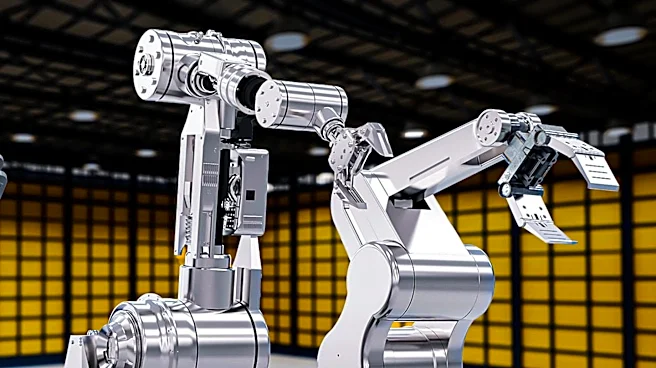
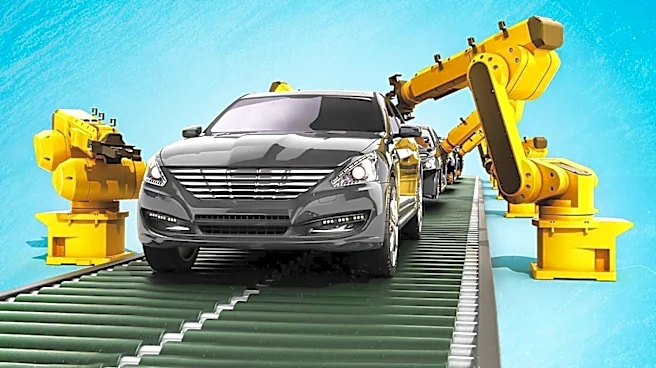
the workcell demonstrated its capabilities in electronics assembly using a Fanuc industrial robot. The system integrates AI, industrial robotics, and modular automation, allowing for reconfiguration without extensive engineering. Intrinsic's approach positions AI as the central operating layer in manufacturing, enabling adaptability to different tasks and reducing the need for specialized robot programming.
Why It's Important?
The introduction of the Intrinsic Intelligence Cell signifies a shift in manufacturing towards more adaptable and software-driven processes. This development could democratize access to advanced robotics, allowing smaller manufacturers to implement AI-powered automation without extensive expertise. By focusing on interoperability and modularity, Intrinsic aims to integrate AI capabilities across various hardware platforms, potentially reducing costs and deployment times. This approach could lead to significant advancements in high-mix manufacturing, where production needs frequently change, thus enhancing efficiency and competitiveness in the U.S. manufacturing sector.
What's Next?
Intrinsic plans to pilot the Intrinsic Intelligence Cell in Foxconn production facilities for electronics assembly. If successful, this pilot could validate the workcell's capabilities in high-volume industrial production, moving beyond exhibition demonstrations. The company's focus on interoperability suggests ongoing collaborations with various hardware manufacturers, potentially expanding the adoption of AI-driven automation across different industries. Additionally, Intrinsic's AI for Industry Challenge aims to engage a broader developer community, fostering innovation in industrial robotics applications.
Beyond the Headlines
The broader implications of Intrinsic's innovation include a potential transformation in how factories operate, with a shift towards software-defined production environments. This could lead to a future where manufacturing processes are reconfigured through software updates rather than mechanical redesigns, making automation more accessible and adaptable. The emphasis on software as a differentiator highlights a trend where AI capabilities become as crucial as the physical robots themselves, potentially reshaping the competitive landscape in industrial automation.