





What's Happening?
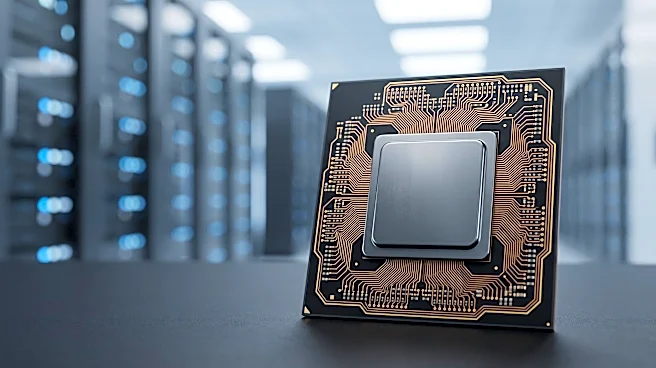
Amazon is reportedly seeking to offload approximately $8 billion worth of advanced Nvidia AI chips to investors through a special-purpose vehicle (SPV). This move, reported by The Financial Times, would allow Amazon to continue investing heavily in AI infrastructure
despite its current negative free cash flow. Under this arrangement, investors would hold SPVs that own Grace Blackwell chips operating in U.S. data centers, while Amazon would rent these chips back. Nvidia is also exploring ways to mitigate the financial risks associated with the capital-intensive AI buildout, reportedly discussing options to offload financing risks to insurance firms and investors. This strategy emerges as the demand for AI chips continues to surge, but also as concerns about a potential 'AI bubble' grow, prompting companies to de-risk their balance sheets and find alternative financing mechanisms for their substantial AI investments.
Why It's Important?
This financial maneuver by Amazon and Nvidia highlights the immense capital requirements and evolving risk management strategies within the rapidly expanding AI industry. Treating GPU hardware as an asset class through SPVs could set a precedent for how large-scale technology infrastructure is financed, potentially attracting new types of investors, such as insurance firms and pension funds, due to the perceived stability of Amazon's credit. However, it also introduces new risks. If the demand for AI chips were to unexpectedly collapse, or if newer, more efficient chips rapidly depreciate the value of existing hardware, investors in these SPVs could face significant losses. This approach reflects a broader trend where companies are seeking innovative ways to fund their AI ambitions without overburdening their balance sheets, especially given the substantial costs involved in building and maintaining AI data centers. The success or failure of such financing models could influence future investment in AI infrastructure across the U.S. technology sector.
What's Next?
The immediate next step involves Amazon's efforts to establish and attract investors to these special-purpose vehicles. The terms of the lease agreements between Amazon and the SPVs will be crucial, particularly regarding how the risk of chip depreciation is allocated. Nvidia's continued discussions with insurance firms and investors about offloading financing risks suggest that similar models may become more prevalent across the industry. The market will closely watch the performance of these SPVs and the long-term value of the AI chips held within them. The rapid pace of AI chip development, with new generations constantly emerging, poses a significant challenge to the assumption that current chips will retain their value for several years. The outcome of these financing strategies could determine the pace and scale of AI infrastructure development, influencing the competitive landscape among major tech companies and the broader financial markets.
Beyond the Headlines
The emergence of financial instruments like SPVs for AI chips points to a deeper transformation in how technological assets are valued and financed. This trend could lead to the 'financialization' of hardware, where physical computing components are treated more like commodities or real estate, subject to market speculation and complex financial engineering. This raises questions about who ultimately bears the risk in a rapidly evolving technological landscape. If the value of AI chips becomes detached from their functional utility due to rapid obsolescence, it could create systemic risks within the financial system. Furthermore, it highlights the increasing interdependence between the tech industry and traditional finance, as the enormous capital demands of AI necessitate novel funding solutions. The long-term implications could include shifts in corporate ownership structures, new regulatory challenges for financial products tied to technology assets, and a re-evaluation of investment strategies in high-growth, high-risk sectors.