



What's Happening?
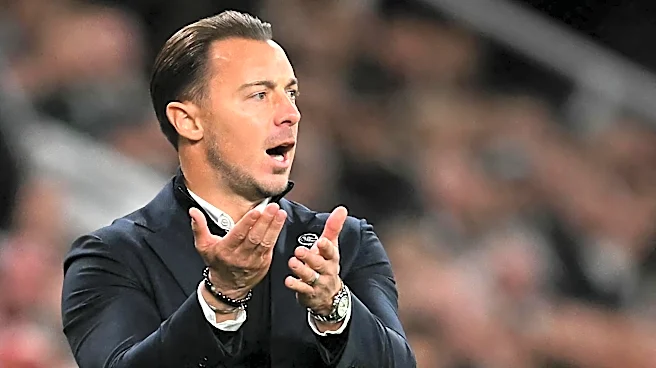
Newcastle United is experiencing significant tactical difficulties under manager Matthias Jaissle, whose preferred aggressive, vertical football style is reportedly not aligning with the current squad's capabilities. Jaissle's system, which emphasizes
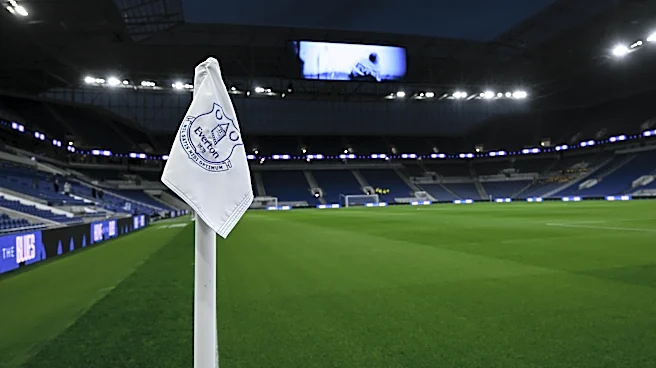
quick transitions and high pressing, leaves the team vulnerable to counter-attacks, particularly when possession is lost. In a recent match against Everton, Newcastle recorded 28 shots compared to Everton's 11, yet lost 3-1, highlighting an issue with converting chances and defensive solidity. The team's fullbacks and central midfielders maintain high positions during attacks, which, if unsuccessful, leaves large spaces in their own half. Opponents have reportedly found a blueprint to exploit these vulnerabilities, waiting for Newcastle to tire before capitalizing on the open spaces. This tactical approach has led to Newcastle feeling out of control for significant portions of games this season, causing concern among fans and observers.
Why It's Important?
The tactical struggles at Newcastle United are significant as they impact the team's performance and potentially its standing in the league. A disconnect between a manager's philosophy and the squad's composition can lead to inconsistent results, affecting fan morale and financial outcomes for the club. The team's inability to convert numerous chances into goals, coupled with defensive frailties, suggests a fundamental imbalance that needs addressing. This situation could lead to increased pressure on manager Jaissle, despite reports that the owners view him as a long-term investment. Continued poor results could impact player confidence, recruitment strategies, and the club's overall market value. The vulnerability to counter-attacks also raises questions about the team's ability to compete against top-tier opponents who are adept at exploiting such weaknesses.
What's Next?
Newcastle United faces immediate challenges in adapting its tactical approach to improve defensive stability and goal conversion. Manager Matthias Jaissle may need to consider adjustments, such as altering the midfield structure from two to three players, to provide more protection for the defense. However, Jaissle has shown reluctance to deviate from his core principles. The club's recruitment strategy will also be under scrutiny, with a focus on acquiring players who better fit Jaissle's demanding system. The development of young talents like 16-year-old Jayden Kouossu, who is being challenged to become a more consistent goal-scorer, will be crucial for the team's future. The team's ability to address these tactical and personnel issues in upcoming matches will determine their trajectory for the remainder of the season and influence the long-term stability of the coaching staff.
Beyond the Headlines
The situation at Newcastle United highlights a broader challenge in modern football: the integration of a manager's distinct tactical philosophy with an existing squad. Jaissle's background, shaped by the aggressive pressing style of Ralf Rangnick, demands a specific type of player—young, hyper-athletic, and capable of sustained high-intensity play. When a squad does not fully embody these characteristics, the implementation of such a system can expose significant weaknesses, leading to a disconnect between theoretical ideals and on-field execution. This scenario raises questions about the balance between managerial vision and pragmatic squad management. The club's commitment to Jaissle as a long-term project suggests a willingness to endure short-term struggles for future alignment, but this approach carries inherent risks, including potential fan discontent and financial implications if results do not improve over time. The development of academy players like Kouossu becomes even more critical in such a context, as they represent the future embodiment of the desired playing style.