
What's Happening?
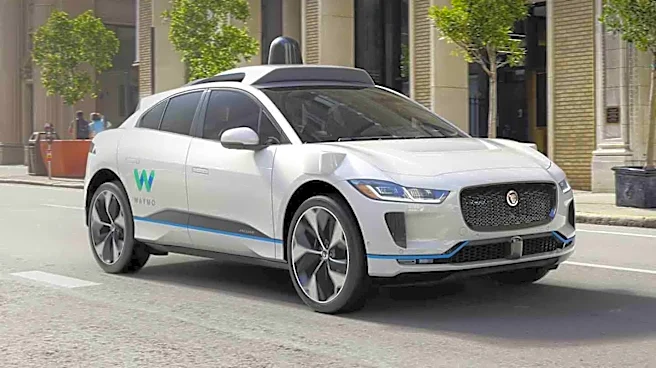
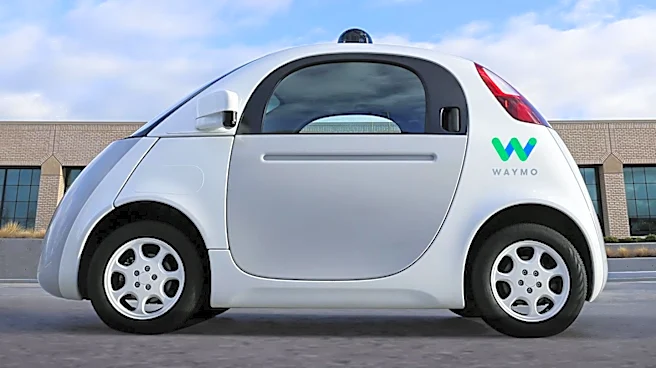
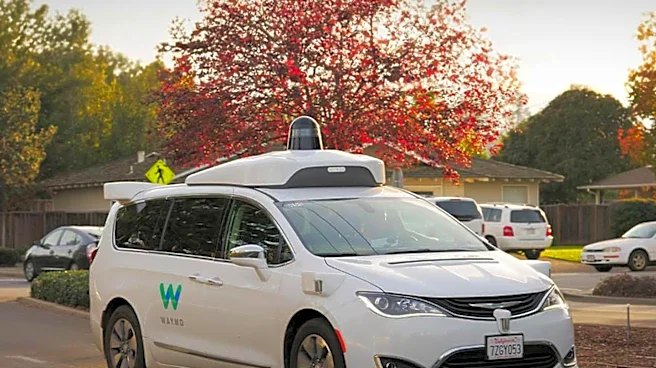
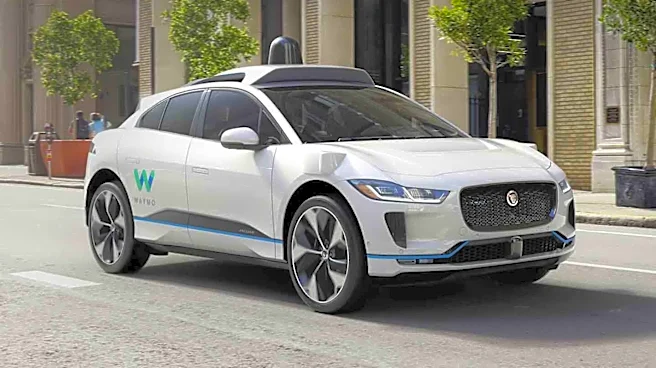
Waymo has suspended all commercial highway operations across the United States due to persistent issues with its autonomous vehicles failing to properly recognize traffic control and road work zones. This
decision follows a ban by California's Department of Motor Vehicles on Waymo driverless vehicles operating and testing on highways in the state, as reported by IT outlet The Verge on November 26. A direct trigger for the suspension was a November 6 incident where a Waymo robotaxi attempted to pass two California Highway Patrol vehicles controlling traffic on Interstate 280. Additionally, Waymo reported 11 incidents between October and November 2026 where its vehicles entered restricted highway lanes due to construction, despite a software update and recall in June aimed at addressing similar problems in Arizona and California. Waymo spokesperson Chris Pappas stated that the company's ride-hailing service on surface streets safely handles over 500,000 rides weekly and that Waymo is working with regulators to resume highway operations, noting no collisions or injuries occurred in the reported incidents.
Why It's Important?
The suspension of Waymo's commercial highway operations carries significant implications for the autonomous vehicle industry and its expansion in the U.S. This setback highlights the complex challenges in developing fully autonomous driving systems, particularly in dynamic environments like highways with varying traffic control and work zones. For Waymo, this move is expected to hinder its business expansion, as users have already reported longer travel times due to the company's previous avoidance of highways and reliance on surface roads. The inability to reliably navigate highways restricts Waymo's ability to offer services to key destinations like airports, impacting its competitiveness and market penetration. Experts, such as Phil Koopman, an emeritus professor at Carnegie Mellon University, have criticized Waymo for expanding without fully resolving these fundamental issues, suggesting that current fixes might be superficial rather than addressing the root cause of perception and reasoning problems in its software.
What's Next?
Waymo is currently engaged in discussions with regulators to find solutions and aims to resume highway operations. The company will need to demonstrate significant improvements in its autonomous driving technology, particularly in recognizing and responding to complex traffic control and road work zones. This will likely involve further software updates and potentially more rigorous testing protocols. The pressure to expand its business, as noted by Waymo's co-chief executive officer Dmitri Dolgov, could lead to a push for rapid solutions, but experts like Koopman advocate for stronger regulatory oversight and public disclosure to ensure that fundamental problems are addressed rather than bypassed. The future of Waymo's highway service will depend on its ability to convince regulators and the public that its technology can safely operate in these challenging environments, which are crucial for broader adoption and service expansion.
Beyond the Headlines
The recurring issues faced by Waymo, despite software updates and recalls, underscore a deeper challenge in the development of artificial intelligence for autonomous vehicles: the ability to interpret subtle contextual cues. Koopman suggests that after transitioning to end-to-end machine learning, Waymo's systems may struggle with nuances like the gaps between construction cones or a police officer's hand gestures, where familiar objects take on different meanings in unfamiliar situations. This points to a fundamental limitation in statistics-based models to properly distinguish such complexities. The incidents also raise ethical and legal questions regarding accountability in autonomous vehicle operations, especially when judgment errors could lead to severe consequences at highway speeds. The ongoing struggle highlights the tension between rapid technological advancement and the imperative for absolute safety, pushing for a re-evaluation of how autonomous systems are developed, tested, and regulated to ensure public trust and safety.