





What's Happening?
Dietitians recommend removing the skin from store-bought rotisserie chicken to make it a healthier meal option, primarily due to the skin's high saturated fat content. While rotisserie chicken is praised for its convenience, affordability, and protein
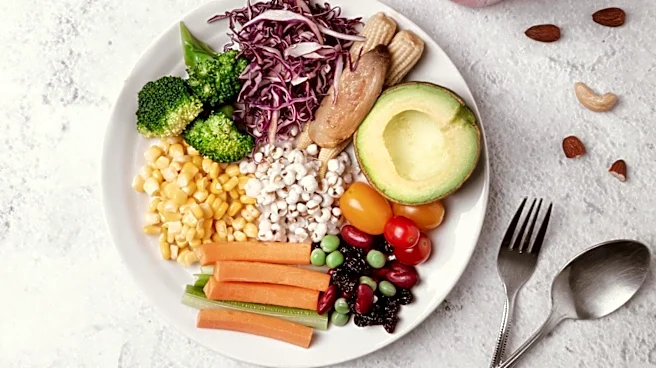
richness, experts like Karolin Saweres, MS, RDN, LD, and Samantha Cassetty, MS, RD, highlight its significant sodium content and potential additives like MSG, sugars, and phosphates. A 3-ounce serving can contain over 400 mg of sodium, compared to less than 50 mg in unseasoned grilled chicken breast. To mitigate these drawbacks, dietitians suggest choosing plain or lightly seasoned options, removing most of the skin, and pairing the chicken with plenty of vegetables, whole starches, and healthy fats to create a balanced meal.
Why It's Important?
This guidance is crucial for consumers seeking convenient yet healthy meal solutions, as rotisserie chicken is a staple in many U.S. households. By understanding the nutritional nuances, individuals can make informed choices that align with their dietary goals, particularly those managing sodium intake or saturated fat consumption. The advice empowers consumers to easily modify a popular, accessible food item to better suit health recommendations without sacrificing convenience. This also underscores the broader public health message about being mindful of hidden sodium and fats in prepared foods, encouraging a more critical look at grocery store purchases and promoting simple adjustments for improved nutrition.
Beyond the Headlines
The discussion around rotisserie chicken's healthfulness extends to broader themes of food sourcing and sustainability. While dietitians focus on immediate nutritional improvements, they also touch upon the environmental impact of poultry production. Suggestions to buy from local farms or butchers, or to check USDA plant numbers for origin, reflect a growing consumer interest in the provenance of their food. This indicates a shift towards a more holistic view of food choices, where health considerations are intertwined with ethical and environmental concerns. For the food industry, this signals a potential demand for rotisserie chicken options with lower sodium, fewer additives, and clearer sourcing information, pushing for greater transparency and healthier product development.