



What's Happening?
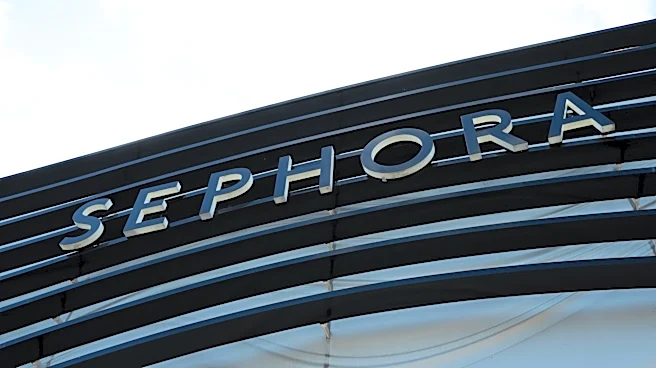
Sephora, a global leader in prestige beauty retail, continues to operate extensively across 35 markets, boasting over 3,200 retail stores and 20 offices worldwide. The company, part of the LVMH Group since 1997, offers a diverse range of prestige beauty products,
including fragrance, makeup, haircare, skincare, and beauty accessories. With 56,000 employees, Sephora curates products from over 500 brands, alongside its own Sephora Collection. The brand, founded in 1969 in Limoges, France, has been active in Turkey since 2007, where it currently operates 44 stores and an online presence in 10 cities. Sephora's operational model emphasizes personalized and immersive experiences across its omnichannel network, aiming to connect customers with beauty brands.
Why It's Important?
Sephora's sustained global presence and extensive retail network highlight its significant influence within the prestige beauty industry. Its operational scale, encompassing thousands of stores and a vast employee base, underscores the economic impact of the beauty retail sector. The company's strategy of curating a wide array of brands, including its private label, demonstrates a model for market dominance and consumer engagement. For the U.S. market, Sephora's global success reflects broader trends in consumer demand for diverse beauty products and personalized shopping experiences. Its continued growth and innovation set benchmarks for competitors and influence supply chain dynamics, product development, and marketing strategies within the beauty retail landscape, affecting both established brands and emerging businesses.
What's Next?
Sephora is expected to continue its focus on enhancing customer experiences through its omnichannel network, integrating both physical stores and digital platforms. The company's commitment to innovation suggests ongoing efforts in product curation, potentially introducing new brands and expanding its Sephora Collection. Furthermore, its emphasis on personalized services indicates a trend towards leveraging data and technology to tailor offerings to individual customer preferences. Future developments may include further expansion into new markets or deeper penetration in existing ones, alongside investments in employee training and operational efficiency to maintain its leadership position in the competitive global beauty retail sector. The company's role within the LVMH Group also suggests potential for synergistic collaborations and strategic initiatives.
Beyond the Headlines
Sephora's business model extends beyond mere product sales, fostering a community where customers can experiment and learn about beauty. This approach has broader implications for consumer culture, promoting self-expression and inclusivity within the beauty industry. The company's disruption of traditional prestige beauty retail since its inception reflects a shift towards more accessible and diverse beauty offerings. Its global reach also highlights the increasing globalization of consumer trends and the power of multinational corporations in shaping market preferences. The emphasis on personalized experiences and a wide brand selection also raises questions about consumer choice, brand loyalty, and the evolving role of physical retail in an increasingly digital world, influencing how consumers interact with and perceive beauty products.