



What's Happening?
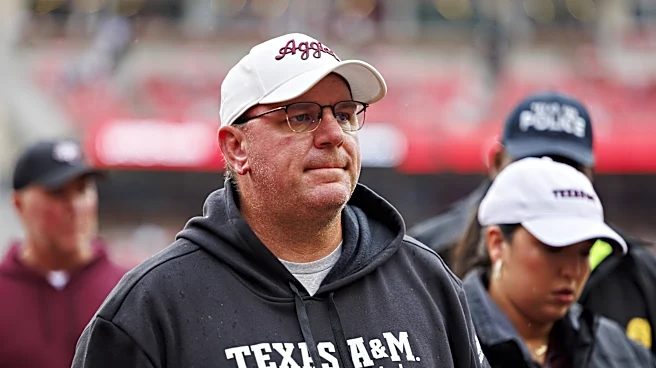
The Texas A&M Aggies football team lost to No. 8 Tennessee with a score of 22-7 at Kyle Field, bringing their season record to 4-6. The Aggies' offense struggled significantly, managing only 179 total yards, eight first downs, and possessing the ball for
less than 18 minutes. Quarterback Marcel Reed completed 9 of 22 passes for 71 yards and threw two interceptions before being replaced by backup Brady Hart late in the fourth quarter. Coach Mike Elko described the offensive performance as 'pathetic' in his post-game press conference and apologized to the fans, stating, 'That’s not nearly what you deserve.' Despite the offensive woes, the defense showed some improvement, holding Tennessee to 260 total yards. Freshman KJ Edwards had a 25-yard touchdown run, which was one of only two plays for the Aggies that gained 20 or more yards. The team now faces the challenge of winning its remaining two games against Oklahoma and Texas to achieve bowl eligibility.
Why It's Important?
This loss is significant for Texas A&M as it further diminishes their chances of achieving a bowl-eligible season, a key benchmark for college football programs. A 4-6 record at this point in the season, especially after preseason expectations, indicates a substantial underperformance that could impact future recruitment and fan engagement. The public apology from Coach Elko highlights the severity of the team's struggles and the pressure on the coaching staff to turn the program around. Continued poor offensive performance could lead to decreased fan morale and potential financial implications for the athletic department, as attendance and merchandise sales can be affected by team success. For the players, the string of losses and the public criticism of their performance can impact team chemistry and individual development, potentially leading to transfers or a decline in future performance. The need to win the final two games against strong opponents like Oklahoma and Texas puts immense pressure on the team, making their path to a postseason appearance extremely challenging.
What's Next?
The Texas A&M Aggies must win their final two games against Oklahoma and Texas to become bowl-eligible. This presents a formidable challenge given their current offensive struggles and the caliber of their upcoming opponents. Coach Elko has publicly committed to fixing the issues, particularly on offense, which suggests potential adjustments in play-calling, personnel, or strategy in the coming weeks. The performance of quarterback Marcel Reed will be under intense scrutiny, and it remains to be seen if the coaching staff will make a permanent change at the position or continue to work with Reed. The team's ability to rally and perform under pressure in these crucial games will determine their postseason fate and could significantly influence the perception of the program heading into the next offseason. Fans and analysts will be closely watching for any signs of improvement or strategic shifts as the Aggies attempt to salvage their season.
Beyond the Headlines
The ongoing struggles of the Texas A&M football program, particularly the offensive unit, raise broader questions about program development and coaching effectiveness in a highly competitive conference like the SEC. Despite significant investments in facilities and coaching staff, the team has consistently fallen short of expectations, leading to frustration among the fan base. This situation could trigger a deeper evaluation of the program's long-term strategy, including player development, recruiting approaches, and offensive scheme philosophy. The public nature of Coach Elko's apology underscores the intense pressure on college football coaches to deliver results, highlighting the business aspect of collegiate athletics where performance directly impacts revenue and brand reputation. The team's current trajectory could also influence the broader landscape of college football, as a struggling powerhouse like Texas A&M can create ripple effects in recruiting battles and conference standings, potentially altering the competitive balance within the SEC for future seasons.