







What's Happening?
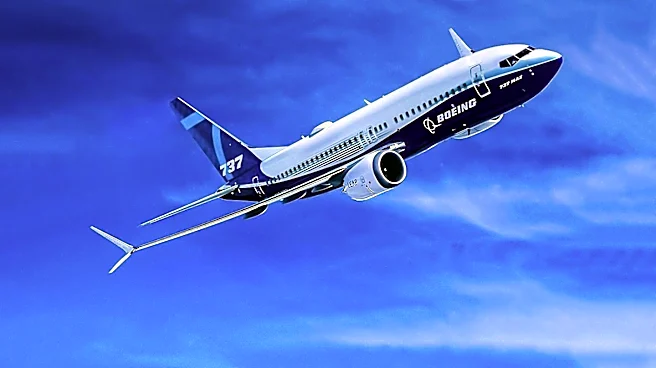
Boeing's board of directors, at the time of the first 737 MAX crash in October 2018, was largely devoid of commercial aviation expertise. Out of thirteen members, only one had experience as a commercial airline chief executive. The sitting chief executive,
while an engineer, came from Boeing's defense division, not commercial aviation. The board's composition leaned heavily towards government and diplomacy, including a former United States trade representative, a retired admiral, a former ambassador to Japan, and a former White House chief of staff, alongside individuals with backgrounds in pharmaceuticals and private equity. This structure allowed the board to confidently address strategic questions, such as competing with Airbus's new fuel-efficient engine option, but left it ill-equipped to evaluate the operational challenges and engineering discipline required to deliver such a response at the demanded pace. The article highlights that the board did not substantively discuss grounding the aircraft even after the initial crash, and a dedicated safety committee was not established until after the second crash in August 2019.
Why It's Important?
The lack of commercial aviation expertise on Boeing's board during the 737 MAX crisis underscores a critical governance gap that can have severe consequences for public safety and corporate accountability. This situation illustrates how a board, despite being composed of intelligent and engaged individuals, can be fundamentally unequipped to address specific operational and engineering challenges if it lacks relevant domain knowledge. The absence of directors with deep commercial aviation experience meant that crucial questions regarding a new anti-stall system were not adequately pressed, potentially contributing to the tragic outcomes of the 737 MAX crashes. This case highlights the importance of board diversity extending beyond traditional metrics like gender or ethnicity to include a diversity of professional expertise, particularly in highly technical industries. For U.S. industries, this serves as a stark reminder that effective oversight requires a board capable of understanding and challenging the operational realities of the business, not just its financial or strategic aspects.
What's Next?
Following the 737 MAX crisis, there has been increased scrutiny on corporate board compositions, particularly in industries with complex technical operations. Companies, especially in sectors like aerospace, manufacturing, and technology, are likely to face pressure from investors, regulators, and the public to ensure their boards possess a more balanced and relevant skill set. This could lead to a trend of appointing directors with direct operational and engineering experience, rather than solely relying on individuals with financial, legal, or governmental backgrounds. Regulatory bodies may also consider implementing stricter guidelines or recommendations regarding board expertise for companies in critical sectors. Furthermore, the incident could prompt internal reviews within corporations to assess their own board's capabilities in overseeing technical and operational risks, potentially leading to changes in director recruitment strategies and board committee structures to enhance oversight of safety and engineering disciplines.
Beyond the Headlines
The Boeing 737 MAX crisis and the subsequent analysis of its board's composition reveal a deeper systemic issue within corporate governance: the prioritization of 'exploration' (growth, strategy, new markets) over 'exploitation' (operational discipline, quality, safety). Boards often focus heavily on strategic expansion, assuming that operational execution is solely the management's responsibility. This case demonstrates that when the 'exploitation loop' breaks—meaning the capacity for disciplined execution cannot keep pace with ambitious exploration—the consequences can be catastrophic. The incident raises ethical questions about the responsibility of board members to ensure they possess or seek out the necessary expertise to govern effectively, especially when public safety is at stake. It also highlights a cultural dimension where operational signals, such as rising defect rates or near misses, are often treated as lagging indicators, rather than leading indicators that a board with genuine operational visibility could act upon before they impact customers. This suggests a need for a fundamental shift in how boards perceive and engage with operational aspects of their businesses.