





What's Happening?
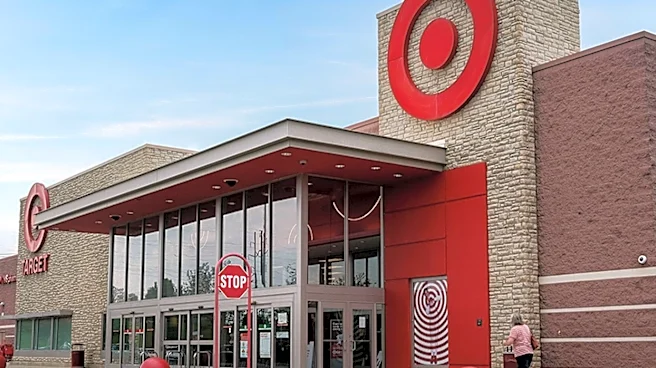
Target is implementing strategies traditionally used in its apparel business to significantly increase sales of its private label brand, Good & Gather. The retail giant aims to grow Good & Gather's sales to $5 billion by adopting fashion-driven and novelty-led
approaches, according to MarketScale. This initiative is part of Target's broader focus on expanding its private label market share, a segment that has shown to outperform national brands. The company's move reflects a wider industry trend where retailers are optimizing business models through efficiency-maximizing technologies and strategic brand development. Target's success in its apparel division is now being leveraged to enhance its grocery offerings, indicating a cross-category strategic shift within the company. This approach includes focusing on distinctive packaging, quality improvements, and competitive pricing to foster customer loyalty and differentiate its private label products from competitors.
Why It's Important?
This strategic shift by Target is significant for the U.S. retail and grocery sectors. By applying apparel-centric marketing and product development to its food brand, Target is attempting to redefine how private labels are perceived and marketed in the grocery space. The goal of reaching $5 billion in sales for Good & Gather highlights the substantial financial commitment and potential impact on market share. This move could pressure national brands, as private labels typically offer higher margins for retailers and lower costs for consumers, fostering greater customer loyalty. Other retailers and grocers will likely observe Target's approach closely, potentially leading to similar strategies across the industry to boost their own private label offerings and market presence. The success of this strategy could influence future investment in private label development and marketing across the U.S. retail landscape.
What's Next?
Target will continue to roll out its fashion-driven and novelty-led strategies for the Good & Gather brand, with a clear focus on achieving its $5 billion sales target. This will likely involve new product introductions, innovative marketing campaigns, and continued emphasis on product quality and distinctive packaging. Competitors in the grocery and retail sectors are expected to monitor Target's progress, potentially adapting similar strategies if Good & Gather shows significant growth. The broader trend of leveraging technology for efficiency and optimizing business models is also likely to continue, with companies exploring AI and other digital solutions to enhance operations and customer engagement. The success of Target's initiative could set a new benchmark for private label brand development and market penetration in the U.S.
Beyond the Headlines
Target's strategy to infuse fashion-driven tactics into its grocery private label points to a deeper evolution in consumer behavior and retail marketing. It suggests that consumers are increasingly seeking novelty and curated experiences even in everyday purchases like groceries, blurring the lines between different retail categories. This approach could lead to a more dynamic and competitive private label market, where brands differentiate themselves not just on price but also on perceived style, innovation, and unique offerings. Ethically, this could raise questions about how retailers balance affordability with premium branding in private labels, and how smaller, independent brands might compete against such well-resourced strategies. Long-term, this could reshape consumer expectations for private label quality and innovation across various product categories.