


What's Happening?
The Coordinator of Energy has completed its review of Benchmark Technologies, which are instrumental in determining the Peak and Flexible Benchmark Reserve Capacity Prices (BRCPs). This review was necessitated by the publication of AEMO’s 2026 Electricity
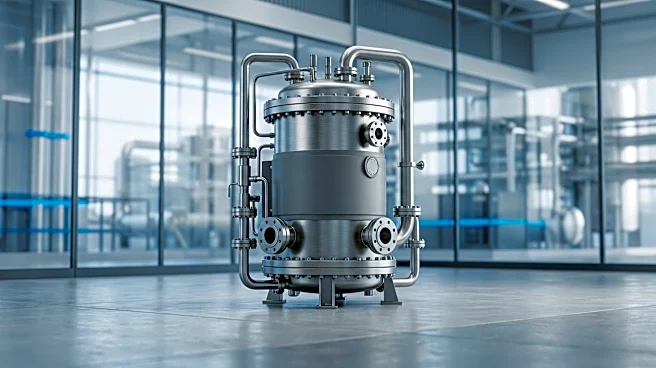
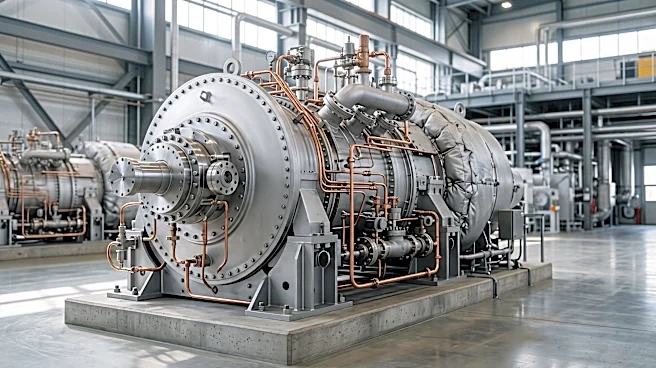
Statement of Opportunities (ESOO) on June 23, 2026, which included a revised Electricity Storage Resource Duration Requirement (ESRDR) of 7 hours, an increase from the previous 6 hours. The Coordinator is mandated to determine Benchmark Capacity Providers within six months of such a revision. Consequently, on November 20, 2026, the Coordinator published its 2026 Determination of the Benchmark Technologies. The determination specifies that both the Benchmark Peak Technology and Benchmark Flexible Technology will be E-Class Simple Cycle Gas Turbines. These turbines are characterized by a two-unit dual-fuel configuration, two electrical connections to the transmission network limiting single contingency to approximately 180 MW, and a dual-fuel operating model certified on liquid fuel but preferring gas. They will also feature 42 hours of onsite liquid fuel storage, connection to the Dampier to Bunbury Natural Gas Pipeline (DBNGP), and DBNGP capacity reservation equal to 25% of daily gas consumption at full capacity, located near a 330kV node on the Clean Energy Link North. Benchmark Reserve Capacity Prices will be calculated on a gross Cost of New Entry basis.
Why It's Important?
This determination by the Coordinator of Energy is crucial for the stability and future planning of the electricity market. The Benchmark Technologies serve as a reference point for setting Reserve Capacity Prices, which are essential for ensuring sufficient generation capacity is available to meet demand, especially during peak periods. By clearly defining the benchmark technologies, the Coordinator provides certainty to energy investors and developers regarding the types of generation assets that will be used as a basis for pricing. The selection of E-Class Simple Cycle Gas Turbines as the benchmark reflects current assessments of reliable and flexible generation options. The increase in the Electricity Storage Resource Duration Requirement (ESRDR) from 6 to 7 hours indicates a growing need for longer-duration energy storage, which could influence future investment in battery storage and other long-duration technologies. This decision impacts the economic viability of different energy projects and ultimately affects the cost and reliability of electricity for consumers.
What's Next?
With the 2026 Determination of Benchmark Technologies now published, energy market participants, including generators, investors, and policymakers, will use this information to guide their strategic decisions. The defined characteristics of the benchmark E-Class Simple Cycle Gas Turbines will inform the design and financial modeling of new power generation projects. The calculation of Benchmark Reserve Capacity Prices on a gross Cost of New Entry basis will provide a clear financial signal for the development of new capacity. Future reviews of Benchmark Technologies will likely continue to adapt to changes in energy demand, technological advancements, and evolving policy objectives related to decarbonization and grid stability. Stakeholders will closely monitor subsequent AEMO ESOO reports and ESRDR updates, as these will trigger further reviews and potential adjustments to the benchmark technologies and pricing mechanisms, ensuring the electricity market remains responsive to changing conditions.
Beyond the Headlines
The selection of E-Class Simple Cycle Gas Turbines as benchmark technologies, despite the broader push towards renewable energy, highlights the ongoing reliance on gas-fired generation for grid stability and reliability, particularly for peak demand and flexible operation. This decision underscores the transitional challenges in moving towards a fully renewable energy system, where dispatchable power sources are still critical to balance intermittent renewable generation. The detailed specifications, such as dual-fuel capability and onsite liquid fuel storage, emphasize resilience against gas supply disruptions. This also points to the complex interplay between energy security, economic viability, and environmental goals. While the long-term trend is towards decarbonization, the immediate need for reliable capacity means that gas turbines continue to play a significant role in maintaining grid stability. This determination reflects a pragmatic approach to energy planning, balancing the imperative for reliable power with the evolving energy landscape.