
What's Happening?
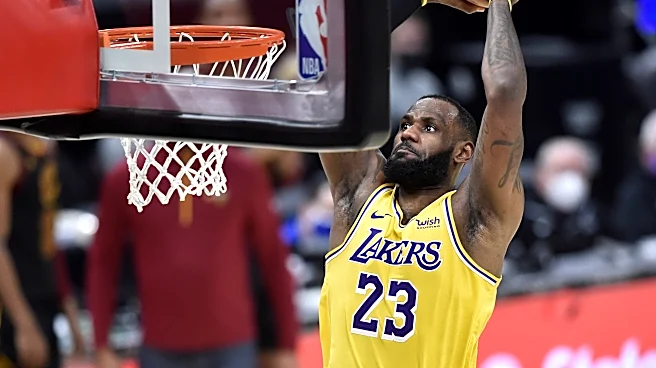
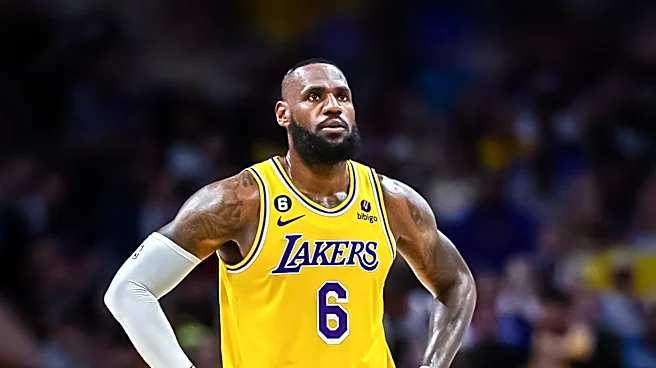
LeBron James recently revealed that Kobe Bryant 'tricked' him for five years during their early NBA career matchups using a simple hand signal. James, known for his meticulous study of opponents' plays and scouting reports, initially believed Bryant's
triangle-shaped signal was a call for a Phil Jackson-style team play, similar to the triangle offense used by the Lakers. However, James eventually realized that the signal was Bryant's way of telling his teammates to clear out so he could attack James in isolation. James recalled thinking, "Man, I realized that sh-t was 'Give me the ball and everybody get the f—k outta way, I’m about to bust Bron’s as*.'" This realization took James five full seasons to grasp, highlighting Bryant's strategic cunning on the court. Despite Bryant's trickery, James won 16 of their 22 regular-season meetings, averaging 28.2 points, 7.4 rebounds, and 7.3 assists, compared to Bryant's 24.6 points, 5.0 rebounds, and 5.2 assists.
Why It's Important?
This anecdote offers a unique insight into the competitive dynamic between two of the NBA's greatest players. It illustrates the high-level strategic thinking and psychological warfare that can occur between elite athletes, even in regular-season games. For fans, it provides a deeper appreciation for the nuances of basketball and the individual rivalries that define eras. The story also highlights LeBron James's dedication to understanding the game, as he meticulously studied opponents' plays. Kobe Bryant's 'trick' demonstrates his intelligence and ability to manipulate opponents' expectations, adding to his legendary status as a fierce competitor. This interaction, though seemingly minor, underscores the intense personal battles that unfolded on the court, contributing to the rich history of NBA rivalries. It also serves as a reminder of the 'what-if' scenario of a potential playoff or Finals matchup between the two, which never materialized.
What's Next?
While this story is a retrospective account, it contributes to the ongoing narrative and legacy of both LeBron James and Kobe Bryant. Such anecdotes often resurface in sports commentary, documentaries, and discussions among fans, further cementing the historical significance of these players. It may inspire current and future athletes to develop similar strategic approaches or to be more vigilant against such tactics. The story also reinforces the idea that even the most prepared athletes can be outsmarted, emphasizing the constant evolution of competitive strategies in sports. For sports analysts and biographers, this detail adds another layer to understanding the competitive mindset and on-court intelligence of both James and Bryant, enriching their respective legacies.
Beyond the Headlines
Beyond the immediate competitive aspect, this story touches on the broader theme of perception versus reality in high-stakes environments. James' initial misinterpretation of Bryant's signal speaks to how preconceived notions or expectations can influence observation. It highlights the psychological dimension of sports, where mental games and subtle cues can be as impactful as physical prowess. The anecdote also subtly underscores the respect and intense focus these two legends had for each other, even if it manifested in competitive deception. It's a testament to the depth of their rivalry that such a 'trick' could be sustained for so long, indicating a profound understanding of each other's playing styles and tendencies. This interaction serves as a micro-example of the larger chess match that often unfolds in professional sports, where every action, no matter how small, can carry significant strategic weight.