



What's Happening?
Researchers at The University of Queensland are advocating for a new paradigm in crop breeding, shifting focus from maximizing individual crop yield to optimizing system-level productivity. This innovative approach involves selecting crop varieties not
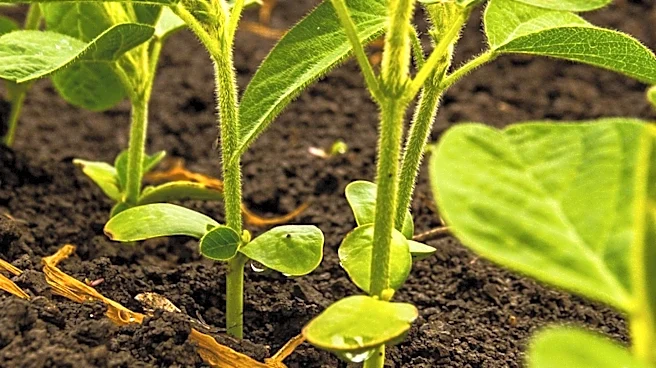
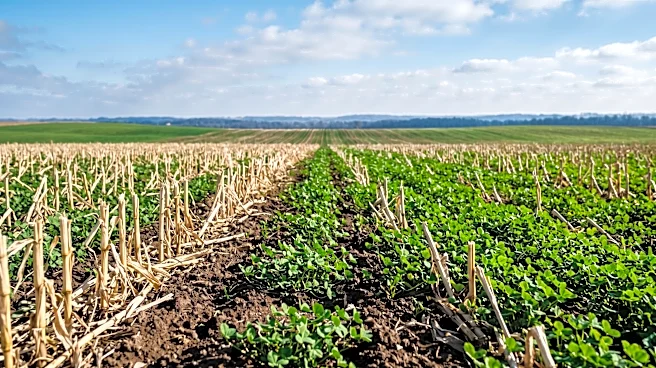
just for their immediate output, but also for the beneficial 'legacy' they leave behind for subsequent crops in a rotation. Dr. Millicent Smith and her team are treating crop rotation as a genetic question, investigating how the genetics of one crop can influence the performance of the next. In a groundbreaking experiment, they grew over 300 genetically diverse mungbean types and then planted the same wheat variety across all plots. The results showed significant variation, with some mungbean varieties improving subsequent wheat yields by 45%, while others halved them. This research indicates that genetic variation exists within crops that can positively impact the soil environment, including nutrient availability, water retention, structure, and microbial communities, thereby potentially reducing the need for external inputs like fertilizers.
Why It's Important?
This breeding innovation holds substantial importance for U.S. agriculture, offering a pathway to more sustainable and economically viable farming practices. By breeding crops that enhance the productivity of subsequent crops, farmers could significantly reduce their reliance on synthetic fertilizers and other chemical inputs. This has direct economic benefits for U.S. growers by lowering input costs, which are a major component of agricultural expenses. Environmentally, it contributes to improved soil health, reduced nutrient runoff, and a smaller carbon footprint, aligning with national sustainability goals. The ability to breed for system-level productivity could also enhance the resilience of U.S. farming systems against climate variability and market fluctuations. This approach moves beyond single-crop optimization to a holistic view of the agricultural ecosystem, potentially leading to more stable and productive farming over the long term. It also opens new avenues for genetic research and development within the U.S. agricultural sector, fostering innovation in plant breeding.
What's Next?
The immediate next step for this research is to broaden the testing of these findings and delve deeper into the biological mechanisms driving the observed effects. Dr. Smith emphasizes the need for a community effort to understand what specifically causes certain crop varieties to leave beneficial legacies. This will involve further genetic analysis, soil science, and microbial studies. The researchers believe that with advancements in drones, genomics, crop models, and computing power, the tools are now available to investigate these complex interactions at the population scale required for crop breeding. While the initial work focused on mungbean and wheat, the principles are expected to apply to other common U.S. crop rotations, such as canola and wheat or chickpea and barley. The long-term goal is to integrate these system-level considerations into conventional crop breeding programs, leading to the development of new varieties that inherently contribute to reduced input requirements and enhanced soil health for U.S. farmers.
Beyond the Headlines
This breeding innovation challenges the conventional wisdom of maximizing individual crop yield at all costs, prompting a re-evaluation of agricultural metrics and priorities. It highlights the interconnectedness of crops within a farming system and the long-term ecological impacts of breeding decisions. The deeper implications touch upon the ethical responsibility of agricultural science to develop solutions that are not only productive but also regenerative and sustainable for future generations. Culturally, it could foster a greater appreciation for the complex biological interactions within soil ecosystems and encourage farmers to adopt more holistic management practices. This shift could also influence agricultural policy, potentially leading to incentives for breeding programs that prioritize system-level benefits and reduced input dependency. Ultimately, this research could contribute to a more resilient and environmentally sound food system in the U.S., where the 'legacy' of each crop is as valued as its immediate harvest.