


What's Happening?
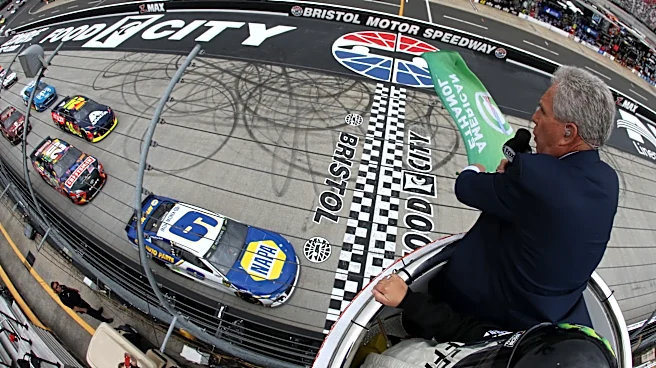
NASCAR driver Ryan Blaney admitted on the 'Actions Detrimental' podcast that he regrets his actions during a post-race confrontation with Carson Hocevar at Bristol Motor Speedway. Blaney acknowledged that he aggressively grabbed and pushed Hocevar after
an on-track incident that led to Blaney's No. 12 Ford spinning into the wall and ending his race with a 33rd-place finish. The contact occurred with just over 40 laps remaining when Hocevar attempted to cross Blaney over. Blaney, who had led 202 laps, believed Hocevar was responsible for the crash. Despite the physical altercation, NASCAR did not penalize Blaney, partly due to his professional and regretful comments made on the podcast. Hocevar, who finished third in the race, later praised Blaney for taking some of the blame and for his reflective account of the incident, suggesting that the respect between the two drivers remains intact despite the heated moment.
Why It's Important?
This incident highlights the intense emotions and competitive pressures within NASCAR, particularly during the Chase for the Cup. Blaney's public admission of regret and his acknowledgment of setting a poor example for younger fans underscore the importance of sportsmanship and professional conduct, even in high-stakes situations. His willingness to reflect on his behavior and express remorse likely influenced NASCAR's decision not to issue a penalty, demonstrating how a driver's post-incident actions and public statements can impact disciplinary outcomes. The interaction also reveals the complex dynamics between competitors, where on-track rivalries can quickly escalate but also be diffused through mutual respect and understanding, as evidenced by Hocevar's subsequent praise for Blaney. This event serves as a case study in how professional athletes manage their public image and navigate conflicts within their sport.
What's Next?
While NASCAR has not issued any penalties for the Bristol altercation, the public discourse surrounding Blaney's apology and Hocevar's response could influence future interactions between drivers and the league's approach to post-race incidents. The incident may lead to increased scrutiny on driver conduct, particularly regarding physical confrontations on pit road. Other drivers might take cues from Blaney's approach to public apologies and accountability, potentially shaping how similar situations are handled in the future. The ongoing competition in the Cup Series means that Blaney and Hocevar will continue to race against each other, and their future on-track battles will likely be watched with added interest, especially given the recent history. The incident also serves as a reminder for drivers to maintain composure, even when frustrations run high, as their actions are constantly under public and league observation.
Beyond the Headlines
The Blaney-Hocevar incident delves into the broader cultural aspects of competitive sports, where passion and aggression often intersect with expectations of professionalism. Blaney's concern about being a role model for younger fans touches upon the ethical responsibilities of public figures in sports. The incident also subtly explores the unwritten rules and codes of conduct among athletes, where a public acknowledgment of fault, even after a physical confrontation, can de-escalate tensions and preserve mutual respect. This dynamic is crucial in a sport like NASCAR, where rivalries are often a significant part of the narrative, but outright feuds can detract from the sport's image. The quick resolution without formal penalties, largely due to Blaney's self-reflection, suggests a preference within the sport for internal accountability and reconciliation over punitive measures, especially when drivers demonstrate genuine remorse.