






What's Happening?
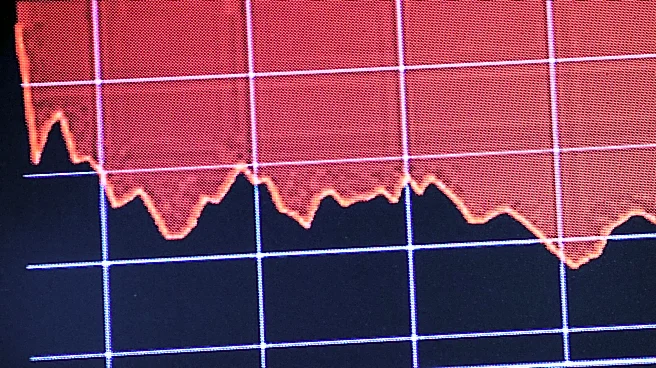
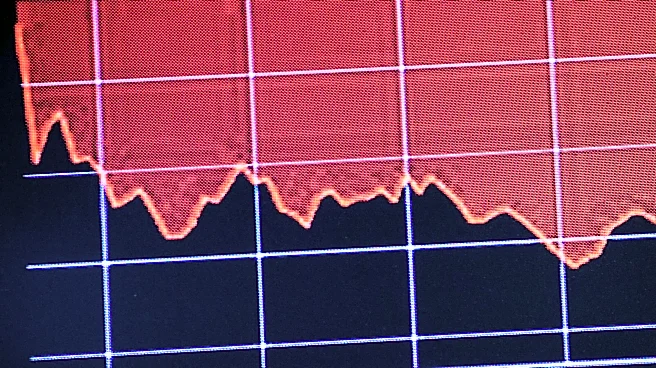
Applied Materials, the largest U.S. supplier of semiconductor manufacturing equipment, saw its stock (AMAT) fall by 19.7% in the last month, closing at $311.18 on November 25, 2026, from $387.59 on October 26. This decline is part of a broader 35% drop
over three months, significantly underperforming the S&P 500's 9.5% decrease during the same period. The company's fiscal Q4 2026 results, announced on November 12, reported record revenue of $10.41 billion and non-GAAP EPS of $4.16, both slightly exceeding consensus. Additionally, guidance for fiscal Q1 2027 projected approximately $11.1 billion in revenue and $4.35 in non-GAAP EPS, also above consensus. Despite strong fundamentals, including a 21% revenue increase in fiscal 2026 to $34.4 billion, the stock's performance was largely impacted by sector-wide pressures, including reassessments of AI data-center spending and post-election fears of tighter chip export rules, particularly concerning China. Analysts have trimmed price targets due to 'multiple compression' rather than deteriorating company fundamentals.
Why It's Important?
The significant stock decline of Applied Materials, a key player in the semiconductor industry, highlights the volatility and sensitivity of the market to shifts in investor sentiment regarding AI spending and geopolitical factors. As the largest U.S. supplier of semiconductor manufacturing equipment, AMAT's performance is often seen as a proxy for the health of leading-edge logic, DRAM, and advanced packaging capacity, which are crucial for AI computing buildouts. The 'valuation unwind' and 'multiple compression' indicate that investors are recalibrating their expectations for growth in the AI sector, even for companies with strong underlying financial performance. This trend could lead to increased scrutiny on other semiconductor and technology stocks, potentially affecting investment flows and capital allocation across the broader U.S. tech industry. Furthermore, the impact of U.S. export rules on China-bound shipments underscores the growing influence of geopolitical tensions on global supply chains and the profitability of U.S. technology firms.
What's Next?
Investors will closely monitor Applied Materials' fiscal Q1 2027 results, expected in February 2027, to see if the company meets its guidance of approximately $11.1 billion in revenue and $4.35 in non-GAAP EPS. Commentary from peer wafer fab equipment (WFE) suppliers like LRCX, KLAC, and ASML will also be crucial in validating Applied Materials' forecast of over 30% WFE market growth in calendar 2027. Any further tightening of U.S. chip export policies towards China could directly impact AMAT's shipment mix, as China has historically been its largest market. The company has already indicated that China's share of 2027 shipments is expected to be under 25%. Additionally, supply chain constraints, clean-room availability, and the durability of the company's gross margin expansion into 2027 will be key factors influencing future stock performance. Broader economic indicators, such as interest rates and cloud capital spending signals, will continue to shape investor sentiment towards the semiconductor sector.
Beyond the Headlines
The situation with Applied Materials extends beyond immediate stock performance, touching upon critical long-term shifts in the global technology landscape. The re-evaluation of AI spending assumptions, despite the technology's transformative potential, suggests a maturing market where initial exuberance is giving way to more pragmatic investment strategies. This could lead to a more sustainable, albeit slower, growth trajectory for AI-related industries. The increasing influence of U.S. export control policies on the semiconductor supply chain highlights a broader trend of technological nationalism and strategic competition between major global powers. This geopolitical dynamic forces companies like Applied Materials to navigate complex regulatory environments, potentially leading to diversification of manufacturing bases and supply chains away from historically dominant markets. The emphasis on 'multiple compression' rather than fundamental deterioration also points to a market that is becoming more discerning, valuing sustainable profitability and resilient business models over speculative growth, which could reshape investment criteria for high-tech sectors.