


What's Happening?
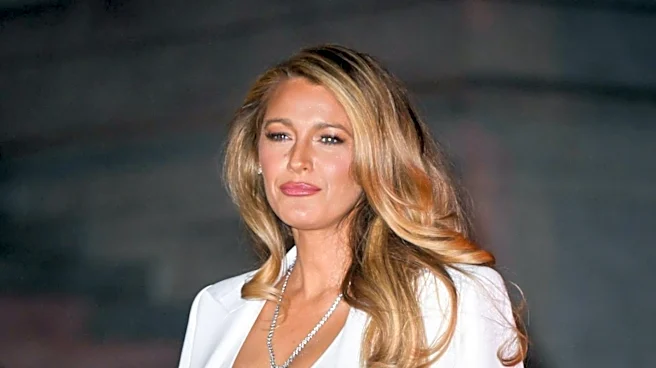
Jamey Heath, a production partner of Justin Baldoni, has publicly called for fans to stop 'diabolizing' actress Blake Lively. This appeal comes after what Heath describes as 'months of low blows' directed at Lively. The specific nature of these 'low blows' or the underlying
reasons for the tensions between fans and Lively are not detailed in the provided information. Heath's statement suggests a sustained period of negative sentiment and actions from a segment of the fanbase, prompting his intervention to advocate for a change in their attitude towards the actress. The context implies a situation where public perception and fan behavior have become a significant issue for Lively.
Why It's Important?
This situation highlights the increasing impact of fan culture and social media dynamics on public figures in the entertainment industry. The call from a production partner like Jamey Heath underscores the potential for fan behavior to escalate to a point where it necessitates public intervention from industry professionals. It reflects a broader concern within the entertainment sector regarding online harassment and the pressure faced by actors and public personalities. Such incidents can affect an individual's well-being, public image, and potentially their career trajectory, demonstrating the tangible consequences of unchecked negative fan engagement. It also raises questions about the responsibility of public figures and their associates in managing fan interactions and mitigating online toxicity.
What's Next?
The immediate impact of Jamey Heath's plea remains to be seen, as it aims to influence the behavior of a potentially large and dispersed fanbase. It is unclear whether this public statement will lead to a significant shift in fan attitudes or if the 'low blows' will persist. Future developments could include further statements from individuals involved, or a continued monitoring of online sentiment towards Blake Lively. The situation may also prompt discussions within the entertainment industry about strategies for addressing and de-escalating fan-related conflicts and online harassment. The effectiveness of such public appeals often depends on the underlying causes of the fan discontent and the willingness of the fanbase to respond positively.
Beyond the Headlines
This incident touches upon the complex ethical considerations surrounding fan engagement and celebrity culture in the digital age. The concept of 'diabolizing' a public figure points to a dehumanizing trend where individuals are subjected to intense scrutiny and criticism, often without full context or understanding. It raises questions about the boundaries of fan expression and the psychological toll such sustained negativity can take on individuals in the public eye. Furthermore, it highlights the role of industry figures in advocating for the well-being of their colleagues and the broader need for a more respectful online environment. The long-term implications could include a re-evaluation of how celebrities and their teams manage their online presence and interact with their fan bases to foster healthier relationships.