




What's Happening?
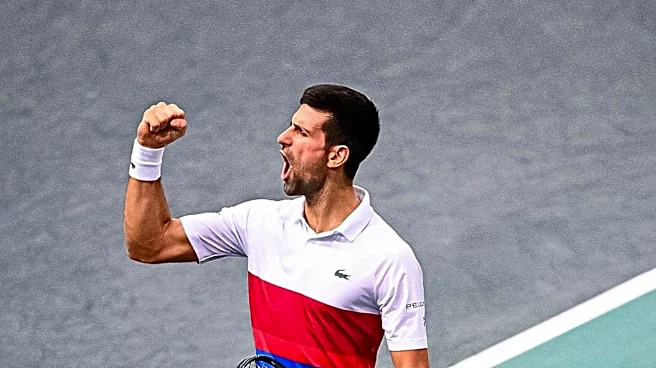
Novak Djokovic, at 39 years old, is nearing the end of his career, having finished the recent season outside the Top 10. Despite a challenging season that included a final appearance in Melbourne, a semifinal at Wimbledon, and a title in Beijing, many
anticipate a decline in his performance. However, Ivan Ljubicic, a former professional tennis player, believes that Djokovic still possesses the skills to compete effectively against younger top players like Carlos Alcaraz and Jannik Sinner. Ljubicic suggests that Djokovic's technical prowess remains undiminished, with physical endurance being the primary concern. He also posits that Djokovic's lower ranking could be an unexpected advantage, potentially allowing him to face top competitors earlier in tournaments when he is fresher.
Why It's Important?
This perspective from Ivan Ljubicic offers a counter-narrative to the common assumption of an inevitable decline for aging athletes. It highlights the strategic implications of player rankings, suggesting that a lower ranking, while seemingly a disadvantage, could be leveraged for better tournament draws and fresher performances against top seeds. For the U.S. tennis audience, this analysis provides insight into the competitive dynamics of the sport and the potential for veteran players to adapt and remain competitive. It also underscores the enduring appeal and competitive spirit of athletes like Djokovic, who continue to challenge younger generations, influencing fan engagement and viewership for major tournaments like the Australian Open.
What's Next?
The tennis world will closely watch Novak Djokovic's performance in the upcoming 2027 season, particularly at the first Grand Slam of the year in January. He will need to defend points from his previous final against Carlos Alcaraz and a semifinal victory over Jannik Sinner in Melbourne. Ljubicic's theory about the advantage of a lower ranking will be tested as Djokovic navigates tournament draws. His ability to maintain physical endurance throughout demanding matches will be crucial. The narrative of an aging champion battling younger rivals is expected to continue, adding significant interest to his matches and potentially impacting the rankings and competitive landscape of men's tennis.
Beyond the Headlines
Ljubicic's comments delve into the psychological and strategic aspects of professional tennis beyond mere physical ability. The idea that a ranking drop could be an 'advantage' challenges conventional wisdom and highlights the nuanced strategies employed by elite athletes and their teams. This perspective could influence how players and coaches approach tournament scheduling and preparation, especially for veterans. It also speaks to the mental fortitude required in high-level sports, where managing emotions and reactions to setbacks, as suggested by Djokovic's own philosophy, can be as critical as physical conditioning. The ongoing narrative of Djokovic's career trajectory will continue to be a significant point of discussion in sports psychology and athletic longevity.