
What's Happening?
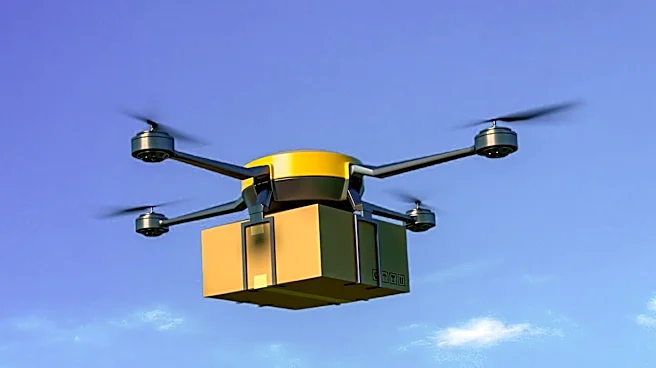
Walmart and Alphabet-owned Wing are expanding their drone delivery service to the Seattle and Denver metro areas next year, marking a significant increase in their joint operations. This expansion will
bring the drone delivery service to nearly 20 major U.S. markets, building on existing services in areas like Dallas-Fort Worth, Atlanta, Houston, and Orlando. The goal is to offer drone delivery from over 270 Walmart stores nationwide. Wing's drones are capable of flying up to 60 mph and can carry packages weighing up to 5 pounds, delivering tens of thousands of Walmart products, including groceries, electronics, and over-the-counter medications, to customers' homes in minutes. This move also aims to test the drone technology in a wider range of weather conditions, from the Pacific Northwest's rain to Colorado's winters.
Why It's Important?
This expansion is a crucial step in the broader adoption of drone delivery services in the U.S., pushing the boundaries of last-mile logistics. For Walmart, it enhances its e-commerce capabilities, offering customers a faster and more convenient delivery option, which is vital in the competitive retail landscape. This service can significantly reduce delivery times for urgent needs, improving customer satisfaction and loyalty. For Wing, it demonstrates the scalability and adaptability of its drone technology across diverse geographical and climatic conditions. The move also signals a growing trend among major retailers to invest in advanced delivery methods, potentially setting new industry standards for speed and efficiency. The ability to deliver a wide range of products quickly could transform consumer expectations for online shopping and impact traditional delivery services.
What's Next?
The drone delivery service is expected to launch in Seattle and Denver metro areas next year. The companies will likely focus on integrating the new locations into their existing operational framework, addressing any logistical or regulatory challenges specific to these regions. Further expansion to more of the planned 270 Walmart stores nationwide will depend on the success and efficiency of these new operations. The data collected from operating in varied weather conditions will be crucial for refining the drone technology and expanding its capabilities. Additionally, the competitive landscape in drone delivery, with other major retailers like Amazon and Lowe's also expanding their services, suggests that continuous innovation and efficiency improvements will be key for Walmart and Wing to maintain their market position.
Beyond the Headlines
The expansion of drone delivery services raises several deeper implications beyond immediate convenience. It highlights the increasing automation in the logistics sector, potentially impacting employment in traditional delivery roles. Regulatory frameworks for drone operations, including airspace management, safety protocols, and noise pollution, will need to evolve to accommodate widespread adoption. Furthermore, the environmental impact of drone delivery, in terms of energy consumption and carbon footprint compared to traditional vehicle delivery, will be an important consideration for sustainability efforts. The integration of such advanced technology into daily life also brings up questions about privacy and security, as drones operate in residential areas. This development represents a significant leap towards a future where autonomous systems play a much larger role in consumer services, prompting ongoing discussions about technology's societal and ethical dimensions.