


What's Happening?
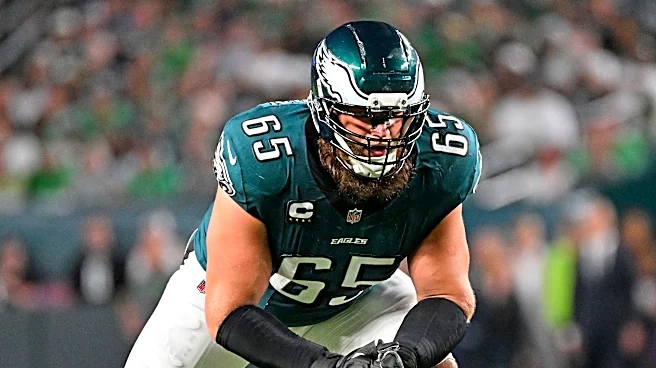
Buffalo Bills safety C.J. Gardner-Johnson is facing criticism for perceived hypocrisy after he publicly condemned ESPN's Stephen A. Smith for mocking NFL player Lane Johnson's retirement due to mental health concerns. Smith, during a 'First Take' segment,
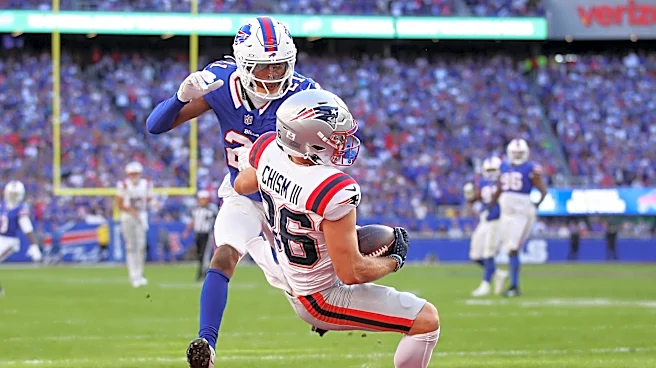
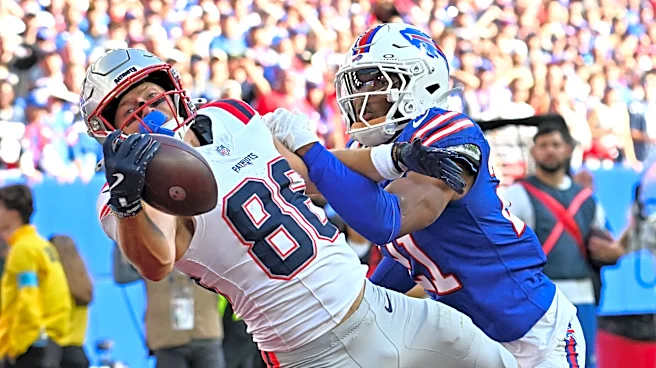
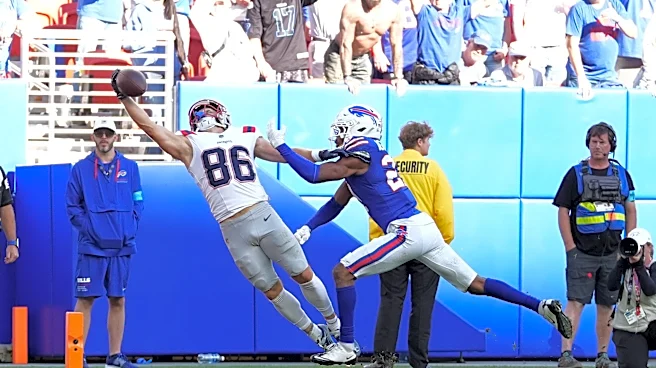
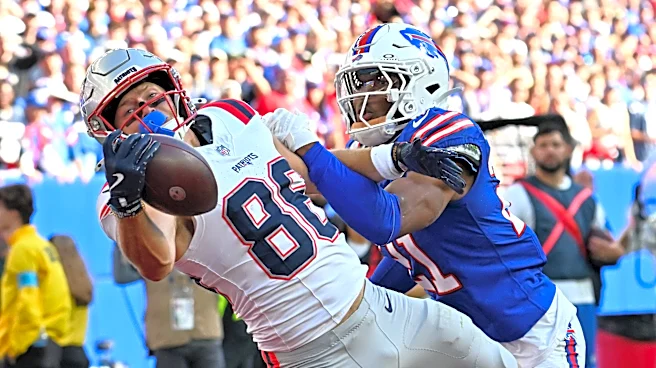
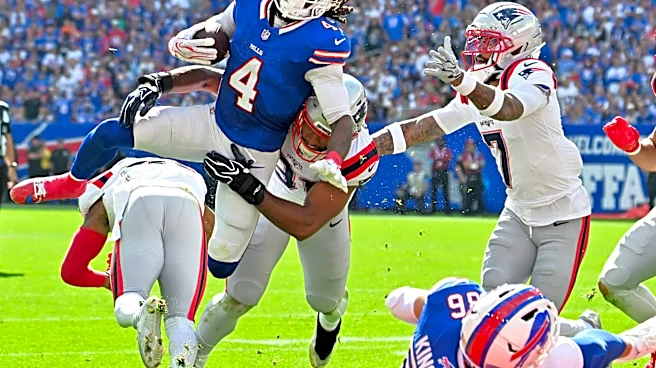
questioned Johnson's timing, stating, 'Four games into the 2026 season, a dude that has been in the league forever, sits back and says, 'I need to focus on my mental health.'' Gardner-Johnson responded on X, writing, 'Mental health is serious, trust me this game takes a toll! Be there for us instead of mock us!' However, just days prior, Gardner-Johnson himself had mocked New England Patriots wide receiver Efton Chism III after Chism made a game-winning catch against the Bills. Gardner-Johnson dismissed Chism as an 'elevated guy' and a 'practice squad player' who 'probably won't hear from him again,' despite Chism being on the 53-man roster since being an undrafted free agent. This has led to widespread online backlash, with fans pointing out the inconsistency in Gardner-Johnson's stance.
Why It's Important?
This incident highlights the ongoing tension and evolving understanding of mental health within professional sports, particularly in the NFL. While there's a growing push for athletes to prioritize and speak openly about mental well-being, public figures like Stephen A. Smith can face significant backlash for perceived insensitivity. The situation also underscores the scrutiny athletes face regarding their public statements and actions, especially when those actions appear contradictory. For players like Gardner-Johnson, such perceived hypocrisy can damage their public image and undermine their credibility when advocating for important causes like mental health awareness. It also brings into focus the competitive nature of sports, where players often engage in verbal sparring, but draws a line when such comments intersect with sensitive personal issues.
What's Next?
The immediate aftermath will likely involve continued public discussion on social media regarding Gardner-Johnson's comments and the broader issue of mental health in sports. Stephen A. Smith may address the criticism he received, potentially offering clarification or an apology, as public figures often do in such situations. Gardner-Johnson might also face questions from the media about the perceived inconsistency in his statements, which could lead to further explanation or a retraction of his earlier remarks about Chism. This event could also prompt more dialogue within NFL locker rooms and among players' associations about how athletes communicate with each other and the media, especially concerning sensitive topics like mental health and player performance.
Beyond the Headlines
This situation delves into the complex dynamics of empathy, accountability, and public perception in the high-stakes world of professional sports. It raises questions about the authenticity of advocacy when an individual's past actions contradict their present statements. The incident could serve as a case study on how quickly public sentiment can turn against an athlete or media personality when their words or actions are seen as hypocritical, especially on issues as sensitive as mental health. Furthermore, it subtly touches upon the hierarchy and respect (or lack thereof) between established players and those perceived as 'underdogs' or 'practice squad' members, revealing underlying attitudes within the competitive sports environment. The broader implication is a continued societal push for greater consistency and genuine support for mental health initiatives, demanding that advocates not only speak the talk but also walk the walk.