
What's Happening?
The United Kingdom is currently experiencing a significant boom in staycation fishing holidays, driven by an 11% year-on-year increase in activity-led vacations and rising travel costs. This trend has
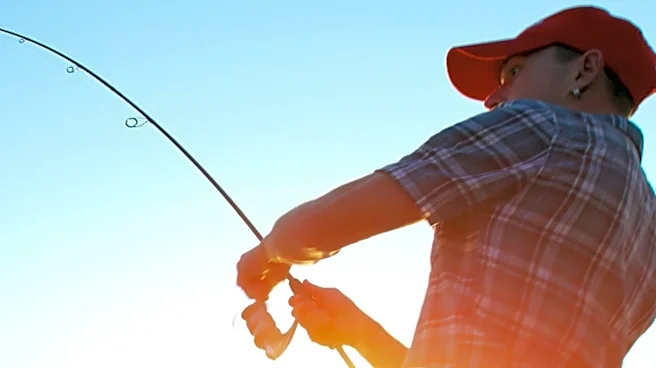
led to record-breaking demand for lakeside lodges, glamping pods, and camping facilities. Fishing trips are evolving into premium retreats, with many now offering amenities such as wood-fired hot tubs, log cabins, and private, well-stocked lakes. Recreational angling contributes approximately £1.5 billion to the UK economy annually and supports 15,000 jobs across various sectors, including charter boat services, accommodation, and hospitality. A notable statistic indicates that 44% of campers also engage in fishing as their preferred on-site activity. The popularity of fishing is further fueled by modern media, including biographical documentaries and YouTube channels dedicated to angling experiences, as well as fishing-themed iGaming. Searches for 'fishing holidays in the UK' have increased by 110% over the last 90 days, reflecting a growing interest in the sport.
Why It's Important?
This surge in staycation fishing holidays has several important implications for the UK economy and tourism sector. The substantial financial contribution of recreational angling, £1.5 billion annually, highlights its role as a significant economic driver, supporting numerous jobs and local businesses. The shift towards high-end fishing retreats indicates a growing market for specialized, luxury staycation experiences, which can command higher prices and attract a more diverse clientele. This trend also suggests a broader consumer preference for activity-led holidays, potentially influencing investment in leisure infrastructure beyond traditional tourism offerings. Furthermore, the increased demand for local travel and activities due to rising international travel costs could lead to a more robust domestic tourism industry, making it less susceptible to global economic fluctuations. The integration of fishing into popular culture through media and gaming also broadens its appeal, potentially attracting new participants and ensuring its continued growth.
What's Next?
The continued growth of the staycation fishing trend is likely to lead to further investment in related infrastructure and services. We can anticipate an increase in the development of high-end fishing accommodations, such as more lodges with luxury amenities, to meet the rising demand. Local businesses in areas popular for fishing, particularly seaside towns, are expected to benefit from increased tourism, potentially leading to a rise in Airbnb properties and other hospitality services. The trend also suggests that event organizers may focus more on fishing-related events to attract anglers and tourists, further boosting local economies. As fishing's popularity grows, there may be increased attention on sustainable fishing practices, with the UK already showing leadership in this area through high catch-and-release rates. This could lead to more eco-conscious tourism initiatives within the angling sector.
Beyond the Headlines
Beyond the immediate economic benefits, the rise of staycation fishing reflects deeper societal shifts. The increased interest in outdoor, activity-led holidays suggests a growing desire among individuals for experiences that offer both relaxation and engagement, moving away from purely passive vacations. The emphasis on 'premium retreats' indicates a consumer willingness to invest in quality and unique experiences, even within their home country. This trend also highlights the power of modern media, including YouTube and iGaming, in shaping leisure interests and introducing new hobbies to a wider audience. The eco-conscious aspect, with anglers returning 80% of their catch, points to a growing environmental awareness within recreational activities, suggesting that sustainability is becoming an increasingly important factor for consumers when choosing leisure pursuits. This could foster a more responsible approach to tourism and outdoor recreation in the long term.