



What's Happening?
The 2026 Rock and Roll Hall of Fame induction ceremony took place at Los Angeles’ Peacock Theater, honoring a diverse group of artists including Wu-Tang Clan, Billy Idol, and Phil Collins. The event featured high-energy performances and emotional speeches,
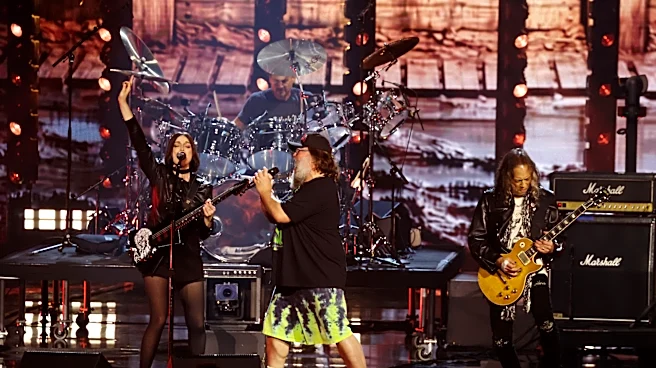
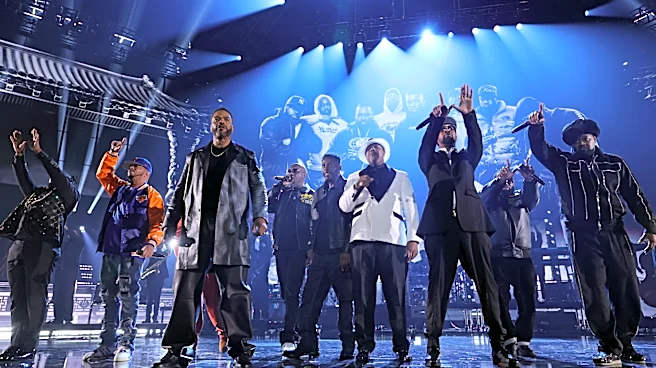
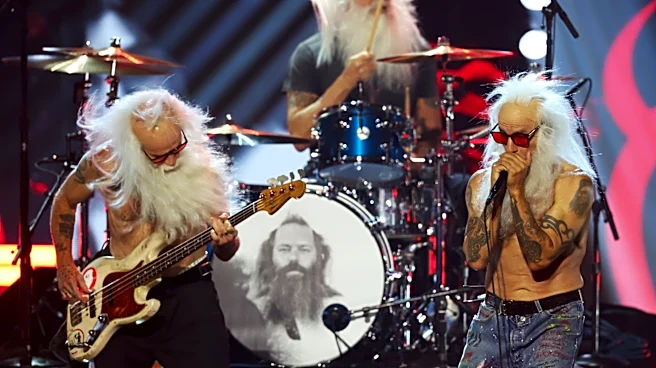
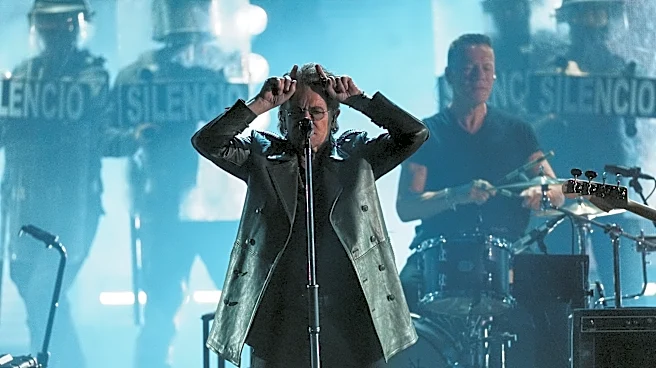
running over four hours. Wu-Tang Clan delivered a powerful medley of their hits, introduced by Chris Rock. The Red Hot Chili Peppers performed in tribute to inductee Rick Rubin. Other notable performances included U2 opening the show, Jack Black joining St. Vincent, Metallica members, and Rage Against the Machine's Brad Wilk for an Iron Maiden tribute, and MC Lyte performing with Queen Latifah, Megan Thee Stallion, and Remy Ma. Usher paid homage to Luther Vandross, and Sienna Spiro covered Sade. Phil Collins, inducted by Travis Barker, gave a tearful speech, expressing gratitude for his career despite his visible frailty, and Cynthia Erivo performed 'In the Air Tonight' with Barker on drums. Oprah Winfrey inducted Luther Vandross, sharing personal anecdotes. Trent Reznor inducted Joy Division and New Order, with Peter Hook performing with Deftones and Chvrches' Lauren Mayberry. The ceremony also included an Oasis segment with a performance by Stephen Wilson Jr. and Billy Idol's induction by Gwen Stefani and Tony Kanal.
Why It's Important?
The Rock and Roll Hall of Fame induction ceremony serves as a significant cultural event, recognizing artists who have profoundly influenced music and society. The 2026 class, with its inclusion of hip-hop pioneers like Wu-Tang Clan and MC Lyte alongside rock legends such as Billy Idol and Phil Collins, reflects the Hall's ongoing effort to broaden its definition of 'rock and roll' to encompass diverse genres that have shaped popular music. This inclusivity is crucial for acknowledging the full spectrum of American musical heritage and its global impact. The emotional speeches, particularly Phil Collins's, highlight the personal journeys and sacrifices behind these iconic careers, resonating with fans and aspiring musicians alike. The collaborative performances, bringing together artists from different generations and styles, underscore the interconnectedness of musical traditions and the enduring power of live music. The event also sparks discussions about the criteria for induction and the legacy of artists, ensuring their contributions are remembered and celebrated for future generations.
What's Next?
The 2026 Rock and Roll Hall of Fame induction ceremony will likely be broadcast, allowing a wider audience to witness the performances and speeches. The event's diverse lineup and memorable moments are expected to generate continued discussion and debate among music critics and fans regarding the Hall's selections and the evolving landscape of popular music. The performances and tributes may also lead to renewed interest in the inducted artists' catalogs, potentially boosting streaming numbers and album sales. The ceremony's blend of established legends and contemporary stars could influence future induction classes, encouraging the Hall to continue its inclusive approach. Furthermore, the event often serves as a platform for artists to reflect on their careers and hint at future projects, as Phil Collins did, keeping fans engaged with the possibility of new music or tours.
Beyond the Headlines
The Rock and Roll Hall of Fame induction ceremony, while a celebration, also subtly reflects broader cultural shifts and ongoing debates within the music industry. The persistent absence of certain inductees, like Oasis, highlights internal conflicts and differing philosophies on recognition and legacy. The inclusion of hip-hop artists, while now more common, still occasionally draws criticism from those who adhere to a narrower definition of 'rock,' revealing underlying tensions about genre boundaries and cultural gatekeeping. The ceremony also serves as a powerful reminder of the ephemeral nature of fame and the enduring impact of artistic creation. The emotional moments, such as Phil Collins's appearance, underscore the human element behind the music, connecting audiences to the artists' vulnerabilities and triumphs. Ultimately, the Hall of Fame, despite its imperfections, acts as a living archive, continually re-evaluating and re-contextualizing the history of popular music and its profound influence on American identity.