






What's Happening?
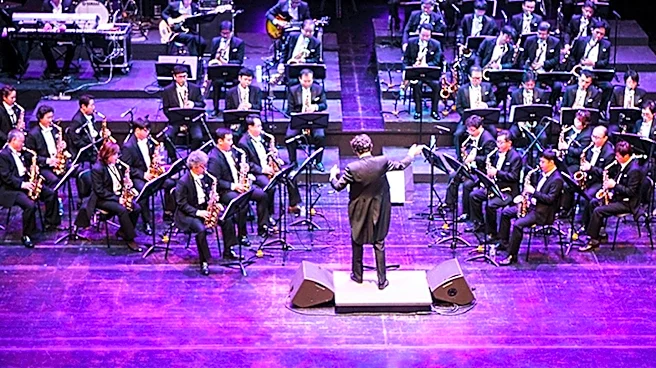
The role of conductors in orchestral music is explored, highlighting the balance between leadership and collaboration. Conductors are often seen as both charismatic leaders and integral listeners, guiding orchestras through performances. The article discusses
the historical development of conducting as a profession and the unique dynamics between conductors and musicians. It emphasizes the conductor's role in shaping the performance, responding to the orchestra's energy, and ensuring a cohesive musical experience. The piece also addresses the misconceptions about conductors' roles and the evolving nature of their relationship with orchestras.
Why It's Important?
Understanding the role of conductors is crucial for appreciating the nuances of orchestral performances. Conductors play a vital part in interpreting music, bringing out the best in musicians, and creating a unified sound. This exploration sheds light on the collaborative nature of orchestral music, where the conductor's vision and the musicians' skills converge to produce a harmonious performance. It also highlights the importance of leadership in the arts, where conductors must balance authority with sensitivity to the ensemble's needs, reflecting broader themes of leadership and teamwork in various fields.