
What's Happening?
Lando Norris, the reigning Formula 1 champion, stated that McLaren's challenging 2026 season is a direct consequence of development sacrifices made to secure last year's championships. According to Norris, the team
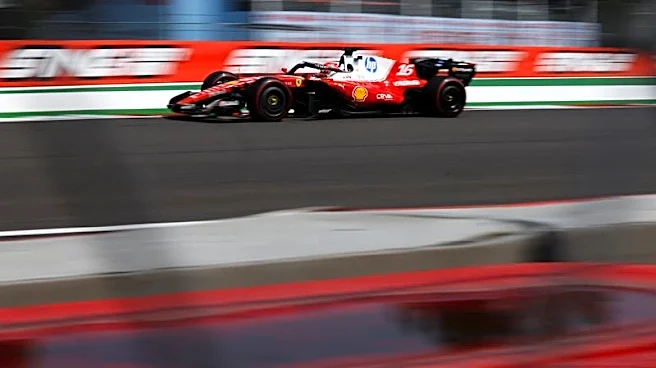
prioritized developing the previous car, which left them with less preparation time for Formula 1's new regulations. Despite this, McLaren achieved victories in Hungary and the Netherlands earlier in the season, but their performance has since declined. Norris views these wins as a significant achievement given their starting position. He also expressed his 'bafflement' at the car's inconsistent single-lap performance, noting that while he can occasionally produce strong laps, the car is generally difficult to drive and lacks consistent pace compared to rivals. His teammate, Oscar Piastri, also faced difficulties, exiting Q2 in Mexico City, highlighting the car's unpredictability.
Why It's Important?
This situation highlights the intricate balance Formula 1 teams must strike between current season performance and future development, especially during periods of significant regulatory change. McLaren's decision to focus on securing a championship in the prior season, while understandable, appears to have created a competitive disadvantage in the current year. This trade-off impacts not only the team's standing but also driver morale and sponsor confidence. For the sport, it underscores how quickly the competitive landscape can shift due to strategic development choices. The inconsistency of the McLaren MCL40, as described by Norris, suggests underlying engineering challenges that need to be addressed to ensure the team can consistently compete at the front of the grid, affecting their long-term championship aspirations and commercial appeal.
What's Next?
McLaren's immediate task is to understand why their recent gains have not kept pace with the opposition and translate that knowledge into a car capable of sustaining a title challenge. The team needs to address the MCL40's unpredictable single-lap performance and overall lack of consistent pace. This will involve a thorough analysis of their car's setup window, particularly how it reacts to changing conditions and wind. For Norris, the goal is to make his 'magical' laps repeatable, requiring the team to provide a more predictable platform. The remaining races of the 2026 season will be crucial for gathering data and making strategic decisions for the 2027 season, as they aim to return to consistent podium finishes and championship contention.
Beyond the Headlines
The narrative surrounding McLaren's 2026 season, as articulated by Norris, delves into the deeper complexities of high-stakes motorsport. It reveals that success in one season can inadvertently sow the seeds for challenges in the next, particularly with evolving technical regulations. This scenario raises questions about the optimal resource allocation in Formula 1: whether to maximize current performance or invest heavily in future development. The 'bafflement' expressed by Norris also touches upon the psychological toll on drivers when their exceptional skill is hampered by an inconsistent machine, challenging the simplistic view that driver performance is solely reflected in championship standings. It highlights the constant pressure on teams to innovate while maintaining reliability and predictability, a delicate balance that defines success in Formula 1.