






What's Happening?
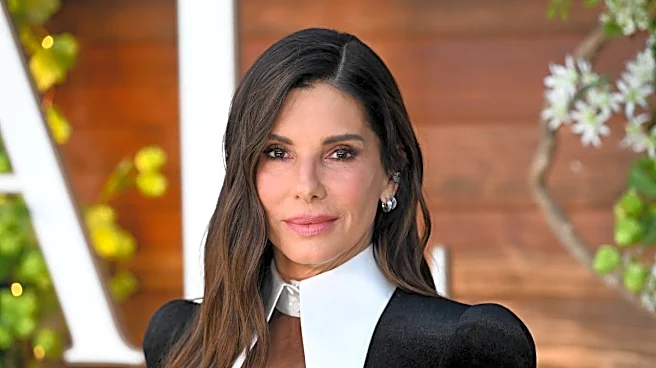
Actress Sandra Bullock recently revealed that she remembers "nothing" from the night she won her Best Actress Academy Award in 2010 for 'The Blind Side'. During an appearance on 'Live with Kelly and Mark', Bullock, 62, explained that her memory of the event
is hazy because she was secretly caring for her newborn son, Louis Bardo Bullock. She had quietly adopted Louis in January 2010, just two months before the Oscars. Bullock stated that she had only about two hours of sleep due to Louis's acid reflux, which required him to be fed every two hours. Her primary focus that night was to get home to her son, leading her to rush through the post-ceremony events, including the afterparty and getting her Oscar engraved. She recalled sitting in her Oscar gown with Louis on her lap, with the statuette on the floor, describing it as "the best" end to an otherwise overwhelming night.
Why It's Important?
Sandra Bullock's account offers a unique perspective on the intersection of personal life and professional milestones, particularly for women in demanding careers. Her decision to prioritize her newborn son over the traditional celebrations of an Oscar win highlights the profound responsibilities of new parenthood and the often-unseen sacrifices made by individuals balancing career and family. This story challenges the glamorous facade of Hollywood, revealing the very human and relatable struggles of sleep deprivation and the overwhelming love for a child. It underscores that even at the peak of professional achievement, personal duties can take precedence, offering a more grounded and authentic view of celebrity life. Her experience resonates with many working parents who navigate the complexities of career success alongside family commitments, emphasizing the universal nature of parental devotion.
What's Next?
Bullock's candidness contributes to a growing trend among public figures to share more authentic experiences, potentially normalizing the challenges of balancing high-profile careers with personal life. This transparency can foster greater empathy and understanding from the public regarding the pressures faced by celebrities. Her story, alongside similar revelations from other actresses like Nicole Kidman, may encourage more open discussions about the realities of life beyond the red carpet. For the entertainment industry, such narratives could prompt a re-evaluation of expectations placed on award winners and public figures, promoting a more supportive environment that acknowledges personal circumstances. It also reinforces the importance of privacy for celebrities, as Bullock chose to keep her adoption secret during that period.
Beyond the Headlines
Bullock's narrative goes beyond a simple anecdote, touching upon themes of identity, sacrifice, and the redefinition of success. Her focus on her newborn son, even during her career's zenith, illustrates how parenthood can profoundly shift priorities and perspectives. The "hazy" memory of her Oscar night suggests that the most significant moments in life are not always the ones publicly celebrated, but rather the quiet, personal ones. This story subtly critiques the societal emphasis on external achievements as the ultimate measure of success, instead highlighting the intrinsic value of family and personal connection. It also sheds light on the immense pressure celebrities face to maintain a public image, even while navigating deeply personal life events, and the quiet strength required to prioritize one's family above all else.