






What's Happening?
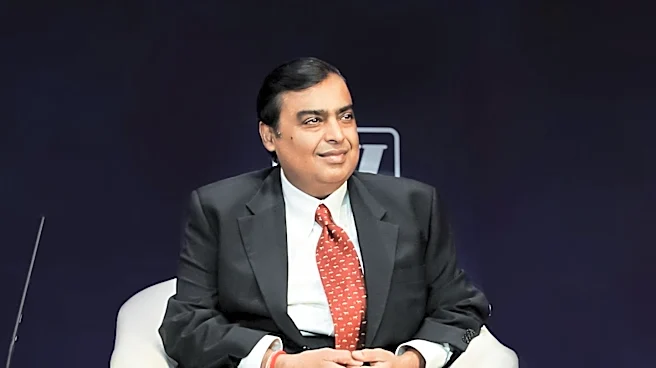
Mukesh Ambani, Chairman and Managing Director of Reliance Industries Limited (RIL), stated in a June 2008 interview with The New York Times that 'money can do very little.' This quote highlights his belief that capital alone is not the primary driver
of lasting business success, purpose, or personal fulfillment. Ambani, recognized as the richest person in Asia and India with an estimated net worth of $110-120 billion as of April 2026, made this remark while discussing how Reliance Industries navigates bureaucracy and builds influence. He suggested that genuine human connections, credibility, and mutual trust are more effective in overcoming obstacles than transactional payments or bribes. Ambani, born in April 1957, is the eldest son of industrialist Dhirubhai Ambani and left an MBA program at Stanford University in 1980 to join the family business. Under his leadership, RIL has expanded into India’s largest private-sector conglomerate, with significant interests in energy, petrochemicals, retail, and telecommunications. He also owns the Mumbai Indians, a successful Indian Premier League franchise.
Why It's Important?
Ambani's perspective offers a significant insight into the philosophy of one of the world's most successful business leaders, particularly relevant in economies where navigating complex regulatory environments is crucial. His emphasis on trust and relationships over mere financial leverage challenges conventional views that often prioritize capital as the ultimate tool for business expansion and influence. This viewpoint can shape how emerging businesses and established corporations approach stakeholder engagement, government relations, and long-term strategic planning. For U.S. businesses operating internationally, especially in markets with intricate bureaucratic structures, Ambani's approach suggests that investing in genuine relationships and building credibility might yield more sustainable results than purely financial transactions. It underscores the importance of soft power and ethical conduct in achieving business objectives, potentially influencing corporate governance and international business ethics discussions.
What's Next?
While Ambani's statement was made in 2008, its underlying philosophy continues to guide Reliance Industries' operations and could influence future business strategies within the conglomerate and beyond. Companies looking to establish or expand their presence in complex global markets may increasingly adopt strategies that prioritize relationship-building and trust over short-term financial incentives. This could lead to a greater emphasis on corporate social responsibility, ethical business practices, and long-term community engagement as integral components of business development. Furthermore, business schools and leadership programs might incorporate such perspectives into their curricula, fostering a new generation of leaders who value intangible assets like reputation and trust as much as financial capital. The ongoing evolution of global business ethics and corporate governance could see a reinforced focus on these principles, especially as transparency and accountability become more critical in international commerce.
Beyond the Headlines
Ambani's statement delves into the deeper ethical and cultural dimensions of business success, suggesting that true influence is built on a foundation of integrity and human connection rather than transactional power. This perspective challenges the often-held belief that wealth inherently translates to unlimited power and influence. It highlights a long-term strategic vision where reputation and trust are invaluable assets, particularly in environments where legal and regulatory frameworks can be complex. This philosophy could inspire a shift in corporate culture, moving away from purely profit-driven motives towards a more holistic approach that values stakeholder relationships and ethical conduct. Such a shift could have profound implications for how businesses interact with governments, communities, and employees, fostering more sustainable and socially responsible economic development. It also implicitly critiques systems where financial leverage is the primary means of navigating challenges, advocating instead for a more principled and relational approach to business.