



What's Happening?
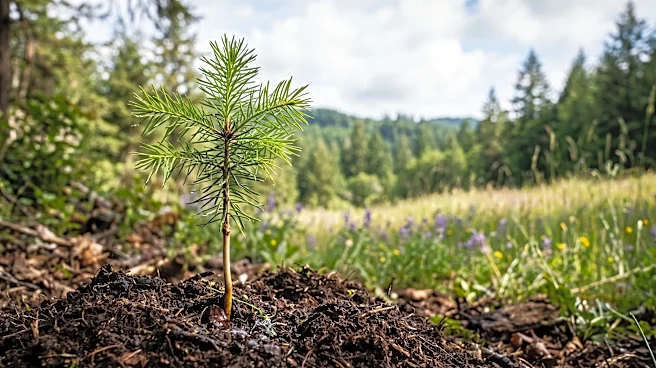
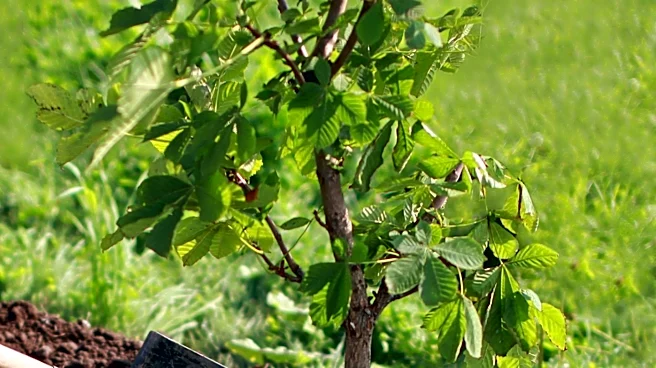
Kim Novak, renowned for her role in 'Vertigo,' has publicly shared her wish for her remains to be composted following her death. Her intention is for this compost to be utilized to cultivate a tree. This decision aligns with her post-Hollywood lifestyle,
which saw her relocate to a farm in Oregon. In her current life, Novak is deeply involved in animal advocacy and dedicates her time to caring for various animals. This personal choice reflects a broader commitment to environmental consciousness and a desire for a natural, sustainable end-of-life process. Her move away from the entertainment industry to a more rural and nature-focused existence underscores her values. Additionally, Novak has voiced criticism regarding proposed plans for a biopic centered on her past romance with Sammy Davis Jr., indicating a desire to control her narrative and privacy.
Why It's Important?
Kim Novak's public statement regarding her post-mortem composting wish highlights a growing trend in end-of-life planning that prioritizes environmental sustainability. This choice, often referred to as 'natural organic reduction' or 'human composting,' offers an alternative to traditional burial and cremation methods, which have larger carbon footprints. Her celebrity status brings increased visibility to this eco-friendly option, potentially influencing public perception and encouraging broader adoption of such practices in the U.S. As environmental concerns become more prominent, the demand for sustainable end-of-life choices is rising. Novak's advocacy, even in this personal decision, contributes to normalizing and popularizing these alternatives, which could lead to changes in funeral industry practices and regulatory frameworks across various states. Her stance on the biopic also underscores the importance of personal autonomy and control over one's life story, even for public figures.
What's Next?
The increasing public awareness generated by figures like Kim Novak regarding sustainable end-of-life options is likely to fuel further discussions and legislative efforts concerning human composting. Currently, only a handful of U.S. states have legalized natural organic reduction, but the growing interest could prompt more states to consider and pass similar legislation. This trend may also lead to the expansion of services offered by funeral homes and the emergence of new businesses specializing in eco-friendly death care. Advocacy groups focused on green burials and sustainable practices are expected to leverage such public statements to push for wider acceptance and accessibility of these options. Furthermore, Novak's criticism of the biopic about her romance with Sammy Davis Jr. could spark conversations within the entertainment industry about the ethics of posthumous portrayals and the rights of individuals to control their personal narratives, even after their passing.
Beyond the Headlines
Kim Novak's decision to opt for composting after death transcends a mere personal preference; it taps into deeper societal conversations about our relationship with nature, mortality, and the environmental impact of human existence. This choice challenges conventional views on death and remembrance, moving towards a more integrated and cyclical understanding of life. It reflects a philosophical shift from viewing death as an end to seeing it as a transformation that can contribute to new life. Ethically, it raises questions about the 'ownership' of one's body and legacy, particularly for public figures. Culturally, it could contribute to a broader re-evaluation of funeral rituals, potentially leading to more personalized and environmentally conscious ceremonies. This movement towards natural organic reduction also highlights a growing desire for authenticity and a return to simpler, more earth-connected practices in an increasingly complex world, echoing her own retreat from Hollywood to a farm.