





What's Happening?
FarEye, an AI-Powered Delivery Management System (DMS), has introduced an agentic AI dispatcher named PILOT. This new system is designed to autonomously plan, execute, and monitor final-mile deliveries with minimal human intervention. According to Gaurav
Srivastava, FarEye’s co-founder and chief product and technology officer, the development was driven by two primary factors: the relentless consumer demand for free and fast delivery, often referred to as the 'Amazon Prime effect,' and significant advancements in AI capabilities, particularly following the debut of Large Language Models (LLMs). Last-mile delivery currently accounts for 40% of the total supply chain cost, making it the most expensive and fragmented segment. The traditional dispatcher role, which involves managing drivers, accidents, late shipments, and urgent customer calls, is often overwhelmed by 'firefighting' daily issues. PILOT aims to alleviate this burden by handling tasks such as scrubbing order data, planning routes, sourcing carriers and drivers, and monitoring operations, either autonomously or with human oversight.
Why It's Important?
The introduction of PILOT by FarEye is significant for the U.S. logistics and retail industries, which are grappling with the escalating costs and complexities of last-mile delivery. By automating and optimizing dispatch operations, the AI system has the potential to substantially reduce the 40% of total supply chain costs currently attributed to the last mile. This could lead to improved profitability for retailers and carriers, enabling them to meet consumer expectations for fast and free shipping more sustainably. Companies like Tractor Supply, which manages a complex network of in-house trucks and third-party carriers, stand to gain from PILOT's ability to dynamically allocate orders to the most cost-effective delivery method, whether it's a company truck, a small van, or a service like FedEx or Uber. The technology also addresses the challenge of fragmented decision-making, allowing dispatchers to focus on critical exceptions rather than routine problem-solving, thereby increasing productivity up to fivefold. This shift is crucial as online ordering continues to grow three to five times faster than in-store sales for many retailers, placing immense pressure on existing delivery networks.
What's Next?
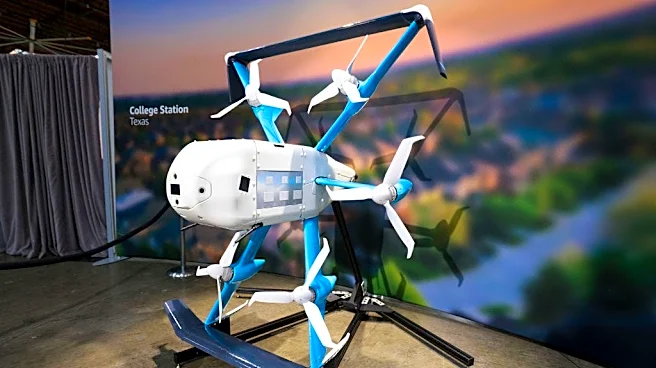
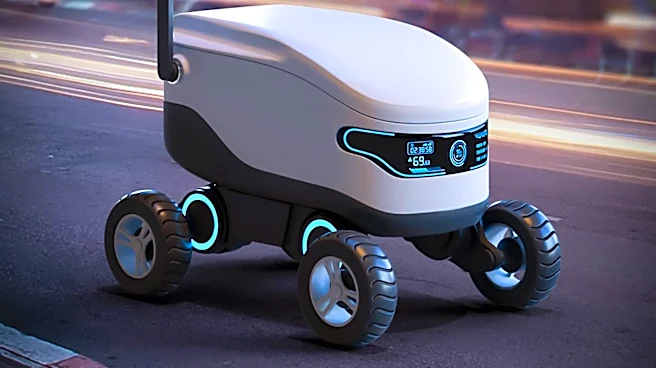
FarEye's PILOT is expected to evolve, with its orchestration logic extending to future delivery modes such as drones and autonomous vehicles as they become viable. While the AI agent currently focuses on planning and orchestration, it is not intended to replace human drivers or floor supervisors, emphasizing that the physical delivery of products will remain a human task. The system's modular design allows it to integrate with existing route optimization, compliance, and track-and-trace tools, forming a unified decision layer. This suggests a future where AI acts as a central intelligence hub for logistics, continuously optimizing operations based on live, dynamic cost data rather than fixed rules. The company is hosting its Last Mile Leaders in America event in Chicago, which will likely serve as a platform to further showcase PILOT's capabilities and discuss its broader adoption within the industry, potentially leading to more widespread implementation and further innovation in last-mile delivery solutions.
Beyond the Headlines
The deployment of AI dispatchers like PILOT highlights a broader trend of automation reshaping the U.S. workforce, particularly in logistics. While FarEye emphasizes that the AI will not replace drivers, the automation of dispatcher roles could lead to a redefinition of human responsibilities within the supply chain. Dispatchers may transition from 'firefighting' to overseeing AI systems and managing more complex, non-routine issues. This shift raises questions about the necessary skills for future logistics professionals and the potential for job displacement in certain administrative roles. Furthermore, the increased reliance on AI for critical logistical decisions, such as optimal delivery routes and carrier selection, could introduce new ethical and legal considerations, particularly regarding accountability in cases of delivery failures or accidents. The technology's ability to process vast amounts of data to make real-time decisions also underscores the growing importance of data privacy and security within the logistics sector, as sensitive information about shipments and customer locations will be managed by AI systems.