
What's Happening?
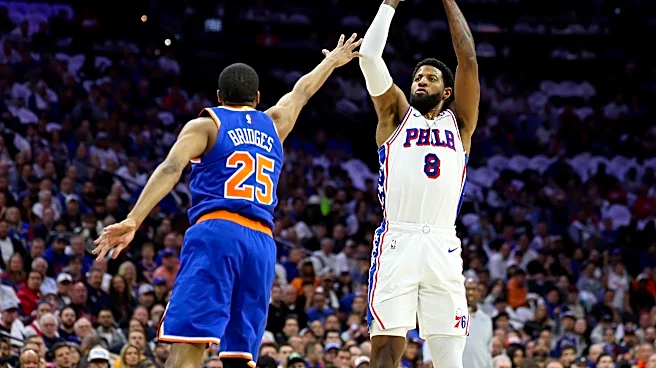
Former Knicks shooting guard Iman Shumpert has publicly defended Mikal Bridges and Josh Hart, arguing against trading them despite their current performance slump and fan calls for roster changes. Shumpert, speaking on 'Gil's Arena,' emphasized that both
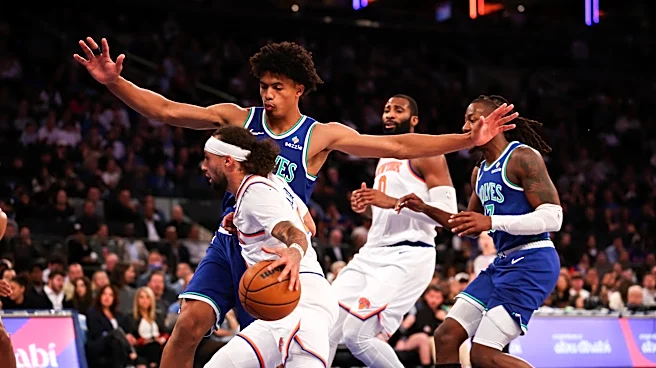
players 'play the right way' and contribute significantly beyond their scoring statistics. He highlighted Bridges' defensive efforts and his remarkable 260-game starting streak in the regular season, referring to him as 'Iron Man Willis.' Hart, while not a high scorer, has been a versatile player for the Knicks, recording 17 triple-doubles and excelling in rebounding and assists. The Knicks, who are the defending champions, have started the season with losses against conference rivals, leading to fan dissatisfaction. Bridges is currently experiencing his worst shooting efficiency, averaging 7.5 points, 3.6 rebounds, and 2.1 assists per game, with a 28.9% three-point shooting percentage. Hart is averaging 6.5 points, 6.3 rebounds, 3.5 assists, and 1.6 steals per game.
Why It's Important?
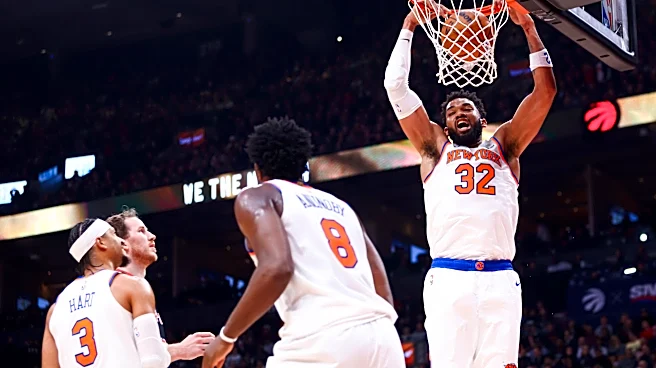
The discussion surrounding Mikal Bridges and Josh Hart is critical for the New York Knicks, as it highlights a significant conflict between on-court performance, player value, and complex salary cap implications. The Knicks' owner, James Dolan, is reportedly determined to avoid exceeding the second apron of the salary cap, which would trigger severe restrictions, including frozen first-round picks, trade limitations, and loss of access to the mid-level exception. The team's 2026-27 payroll is projected to be around $218.4 million, just $3.3 million below the second apron. The combined salaries of their five highest-paid players—Karl-Anthony Towns, OG Anunoby, Jalen Brunson, Bridges, and Hart—total nearly $192 million. This financial constraint means that keeping the core championship team intact is mathematically challenging without significant pay cuts or trades. The decision on Bridges and Hart will directly impact the team's financial flexibility and its ability to make future roster moves, potentially forcing a choice between key wing players despite their past contributions to a championship run.
What's Next?
The New York Knicks face an imminent decision regarding their roster, particularly concerning Mikal Bridges and Josh Hart, as they navigate the complexities of the NBA's salary cap. With the team's payroll nearing the second apron, the front office will need to make strategic choices to avoid severe financial penalties and trade restrictions. While Iman Shumpert advocates for retaining Bridges and Hart based on their defensive contributions and overall impact, the financial reality suggests that keeping all five core players from their championship team may be impossible without significant salary adjustments. The team's performance in upcoming games, especially if the slump continues, could intensify pressure from fans and management to make roster changes. The Knicks will likely explore various options, including potential trades or contract renegotiations, to maintain financial flexibility while attempting to preserve their competitive core. The outcome will significantly shape the team's trajectory for the current and future seasons.
Beyond the Headlines
The debate over Mikal Bridges and Josh Hart extends beyond their individual statistics, touching upon the evolving dynamics of player valuation in professional sports, particularly in the context of salary cap restrictions. Iman Shumpert's defense of the players underscores a traditional view where effort, defense, and consistency (like Bridges' 'Iron Man' streak) are highly valued, even during shooting slumps. However, the modern NBA's financial landscape, with its stringent salary cap rules and luxury tax penalties, often forces teams to prioritize financial flexibility over sentimental attachments to players, even those who contributed to a championship. This situation highlights a broader tension between basketball logic and salary-cap logic, where a player's perceived value on the court must be constantly weighed against their financial impact on the team's long-term sustainability. The Knicks' predicament could set a precedent for how other championship-contending teams manage their rosters under similar financial pressures, potentially leading to more frequent roster turnovers even for successful teams.