





What's Happening?
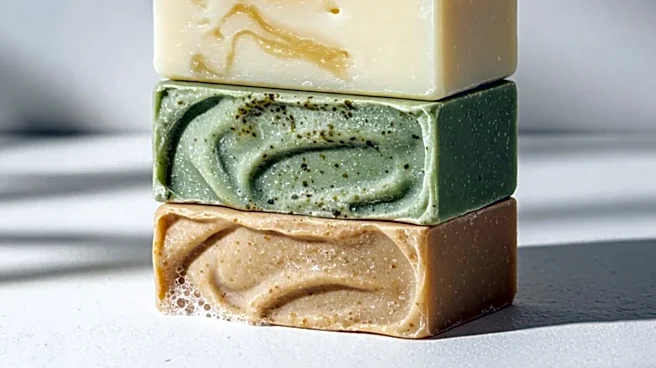
A recent review integrates existing literature on Indigofera-derived materials, specifically Moroccan Nila powder, and rice-derived ingredients to assess their potential for use in herbal cleansing bars. The research highlights that while Indigofera species,
including *Indigofera tinctoria*, are known for producing indigo pigment and possess traditional medicinal uses, the commercial term 'Moroccan Nila' does not inherently establish a single botanical identity. Similarly, rice and its derivatives have a long history in cosmetics, with rice bran being particularly rich in beneficial compounds. The review aims to provide a scientific rationale for combining these two materials in a cleansing bar, acknowledging the distinction between evidence from extracts or isolated compounds and that applicable to crude powders. It emphasizes the need for authentication of raw materials and standardized evaluation of the finished product.
Why It's Important?
This research is important for the cosmetic industry, particularly for the development of natural and plant-derived products. By systematically reviewing the properties of Moroccan Nila powder and rice flour, the study provides a foundation for creating new formulations that cater to consumer demand for natural ingredients. Understanding the specific benefits and limitations of each component, as well as the challenges in authenticating traditional ingredients, can lead to more effective and scientifically sound product development. This could influence product innovation, regulatory considerations for natural cosmetic claims, and consumer trust in products marketed with traditional ingredients. The emphasis on scientific rigor and authentication helps to move beyond anecdotal evidence, promoting transparency and efficacy in the natural cosmetics market.
What's Next?
The review identifies several critical next steps for developing a Moroccan Nila and rice flour cleansing bar. Future research should focus on authenticating the specific botanical identity of 'Moroccan Nila' used in formulations, as its commercial name does not guarantee a single source. There is a need for direct studies on the combined effect of Nila powder and rice flour in a cleansing bar, as current evidence primarily pertains to individual ingredients or extracts. Standardization of raw materials, including particle size, moisture content, and phytochemical fingerprints, is crucial for reproducibility and consistent product quality. Finally, if laboratory properties are acceptable, a properly designed skin-compatibility or user-acceptability study would be necessary, adhering to ethical guidelines, to validate any claims about the product's efficacy and safety.
Beyond the Headlines
The exploration of Moroccan Nila powder and rice flour in cosmetic formulations touches upon broader themes of traditional knowledge integration into modern science and the challenges of commercializing natural ingredients. The distinction between traditional use and clinical proof, as highlighted in the review, underscores the ethical and scientific responsibility in product development. It also brings to light the complexities of botanical authentication in a global supply chain, where commercial names may not align with scientific classifications. This research could set a precedent for how traditional ingredients are vetted and incorporated into mainstream products, influencing consumer perceptions of 'natural' and 'organic' labels. It also emphasizes the ongoing need for rigorous scientific validation to ensure product safety and efficacy, preventing misleading claims in the rapidly expanding natural cosmetics market.