





What's Happening?
Wharton Emeritus Professor and WisdomTree Senior Economist Jeremy Siegel asserts that a significant decline in energy prices is poised to bolster the market, enhancing consumer purchasing power as the holiday shopping season approaches. Siegel anticipates
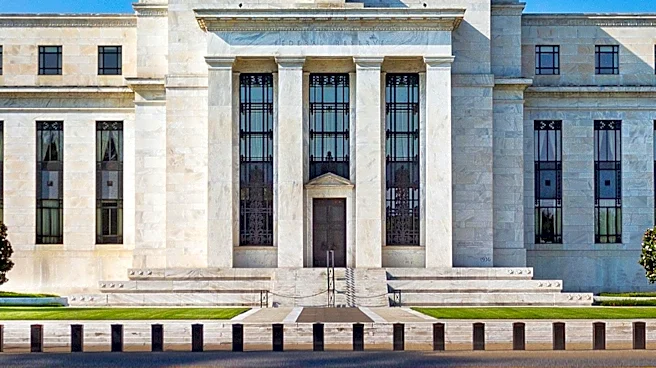
that the Federal Reserve will not proceed with a 50-basis-point rate hike in December. He argues that the reduction in oil prices will effectively cool headline inflation, thereby alleviating pressure for further monetary tightening. Despite a recent tech selloff, Siegel maintains a positive outlook on equities through 2027, specifically expecting value stocks to regain their relative strength. This perspective comes as S&P 500 futures experienced a 0.73% drop ahead of key PCE data, and Nvidia (NVDA) saw an 8% decline due to political and regulatory scrutiny.
Why It's Important?
Siegel's analysis carries significant weight for U.S. economic stakeholders, particularly investors and consumers. His prediction of sustained strength in value stocks suggests a potential shift in market dynamics, favoring more established, fundamentally sound companies over growth-oriented tech firms that have recently faced headwinds. For consumers, falling energy prices translate directly into increased disposable income, which could stimulate retail spending during the crucial holiday season and beyond. This boost in consumer purchasing power could act as a natural economic stabilizer, potentially mitigating the need for aggressive interest rate hikes by the Federal Reserve. If Siegel's forecast holds true, it could lead to a more balanced economic recovery, benefiting sectors traditionally considered 'value' and providing a buffer against inflationary pressures.
What's Next?
The immediate focus will be on the upcoming PCE inflation and GDP data, which will provide further insights into the U.S. economic landscape. The Federal Reserve's decision regarding interest rates in December will be a critical event, as it will either validate or challenge Siegel's prediction of no 50-basis-point hike. Market participants will closely monitor oil price movements and their impact on headline inflation figures. Should energy prices continue their downward trend, it could reinforce the argument for a less aggressive Fed stance. Investors will also be watching for signs of value stocks outperforming growth stocks, particularly in the context of ongoing regulatory scrutiny on tech giants like Nvidia. The performance of the S&P 500 and other major indices in the coming weeks will indicate whether Siegel's optimistic outlook for value stocks and the broader market is gaining traction.
Beyond the Headlines
Siegel's long-term perspective on value stocks recovering relative strength into 2027 suggests a potential re-evaluation of investment strategies. This could signal a broader market rotation away from the high-growth tech sector that has dominated for years, towards more traditional, dividend-paying companies. Such a shift could have profound implications for capital allocation, corporate valuations, and the overall structure of the U.S. equity market. Furthermore, the interplay between energy prices, inflation, and monetary policy highlights the complex and interconnected nature of the modern economy. A sustained period of lower energy costs could not only ease inflationary pressures but also provide a competitive advantage to energy-intensive industries, potentially reshaping supply chains and manufacturing landscapes within the U.S. The debate over the Fed's policy decisions will continue to reflect differing views on the underlying health and future trajectory of the U.S. economy.