






What's Happening?
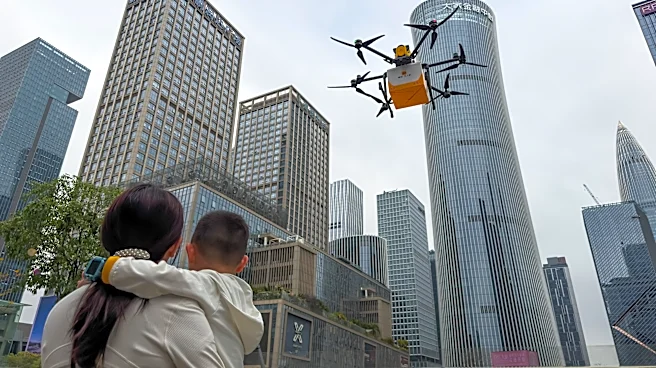
Wing, a drone delivery company, is set to begin delivering Walmart orders via drone in Los Angeles starting next year. A demonstration flight has already occurred downtown, near the Japanese American National Museum and MOCA Geffen in Little Tokyo, as reported
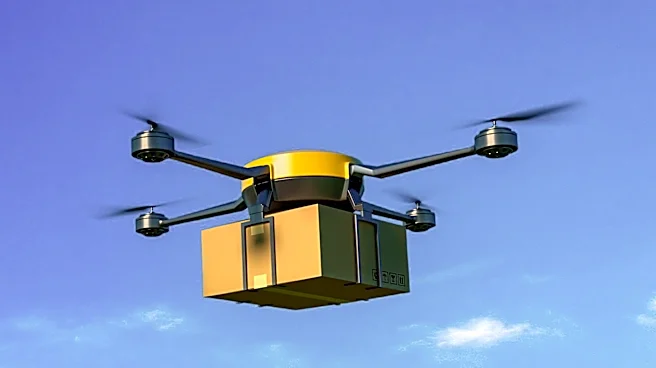
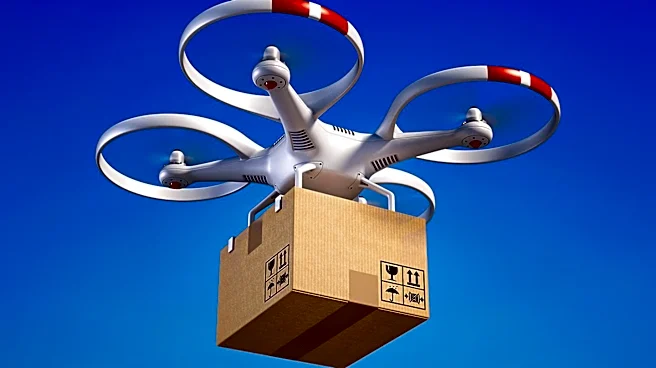
by the Los Angeles Times. Initially, Walmart will be Wing's exclusive customer in Los Angeles. While Wing and Walmart announced Los Angeles as a target city in January, alongside St. Louis, Cincinnati, and Miami, specific store addresses and launch months for Los Angeles have not yet been disclosed. Wing plans to establish its operational hubs at Walmart stores, allowing customers to place orders through either the Walmart or Wing app, with deliveries currently offered for free. Wing's drones operate at altitudes of 150 to 200 feet and speeds up to 60 mph, capable of carrying 2.75 pounds, with plans to increase capacity to 5 pounds. The drones lower packages into yards using a tether. The company aims to serve 40 million Americans and over 270 stores by 2027.
Why It's Important?
The expansion of drone delivery services into a major metropolitan area like Los Angeles signifies a significant step forward for automated logistics in the U.S. This development could reshape consumer expectations for delivery speed and convenience, particularly for smaller, urgent orders. For Walmart, it represents an enhancement of its last-mile delivery capabilities, potentially increasing its competitive edge against other retailers. The entry of Wing into Los Angeles also highlights the increasing integration of drone technology into urban airspace, necessitating coordination with existing aerial operations, such as those of the Los Angeles Police Department, which already utilizes drones and helicopters extensively. The potential partnership between Wing and DoorDash suggests a collaborative model for drone delivery, which could lead to more efficient use of airspace and infrastructure by consolidating delivery networks rather than proliferating them. This could benefit consumers through broader service availability and potentially lower costs, while also presenting new operational challenges for urban planning and air traffic management.
What's Next?
Wing is expected to announce specific Walmart store locations in Los Angeles that will serve as drone hubs before the 2027 launch. This information will be crucial for residents to understand the operational zones and potential drone traffic in their neighborhoods. DoorDash, which holds its own FAA air carrier certificate and operates its own drones in Northern California, has expressed interest in partnering with Wing for its Los Angeles operations. Harrison Shih, head of DoorDash Air, views drone delivery as a 'multiplayer game' and prefers to collaborate with Wing, as they have done in Christiansburg, Virginia, and Charlotte. Such a partnership could streamline drone delivery services in Los Angeles by reducing the number of independent drone networks. The ongoing coordination with the Los Angeles Police Department regarding shared airspace will also be a critical aspect of future operations, as Wing has stated it responsibly shares air with traditional aircraft and other drone operators. The success and public reception of this initial rollout will likely influence the pace and scale of further drone delivery expansions in other U.S. cities.
Beyond the Headlines
The introduction of widespread drone delivery in Los Angeles raises several deeper implications beyond immediate logistical benefits. Ethically, the constant presence of delivery drones in residential airspace could lead to concerns about privacy, noise pollution, and visual intrusion for residents. Legally, the regulatory framework for managing multiple commercial drone operators in dense urban environments will need to evolve, especially concerning air traffic control, accident liability, and data security. The integration of these commercial drones with existing public safety drone operations, like those of the LAPD, also presents complex coordination challenges and potential for conflicts. Culturally, the normalization of drone deliveries could alter the urban soundscape and visual landscape, potentially shifting public perception of technology's role in daily life. Long-term, this development could accelerate the automation of various urban services, leading to discussions about job displacement in traditional delivery sectors and the broader societal impact of an increasingly automated economy. The public's acceptance and adaptation to this new mode of delivery will be a key factor in its ultimate success and expansion.